Garage doors are designed to operate smoothly with minimal effort. If your opener has started moving more slowly, stopping midway, making unusual noises, or struggling to lift the door, it often signals an issue elsewhere within the system. Springs, cables, rollers, lubrication, and normal wear can all affect performance. Understanding the cause early can help homeowners avoid unnecessary strain, prevent unexpected breakdowns, and maintain reliable operation.
How a Garage Door Opener Is Supposed to Work
Many homeowners assume the opener does most of the lifting, but that is not actually the case.
Garage door springs carry the majority of the door’s weight, while the opener primarily guides the door through its opening and closing cycle. When all components are functioning properly, the system remains balanced, allowing the opener to operate efficiently.
If the balance changes because of worn parts, increased friction, or damaged components, the opener may begin working harder than intended. Over time, this added strain can contribute to common garage door opener problems.
Common Causes of Garage Door Opener Problems
Several components can influence opener performance. When one part begins to fail, the opener often compensates until symptoms become noticeable.
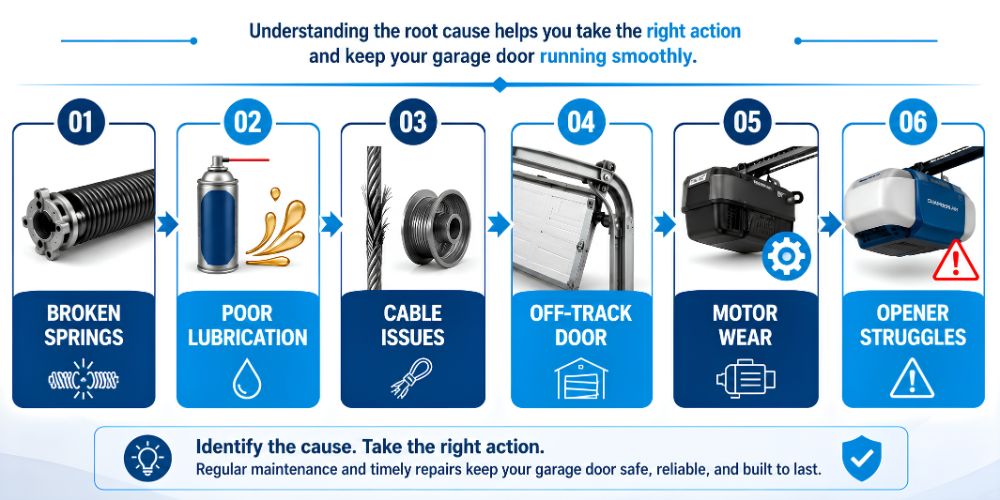
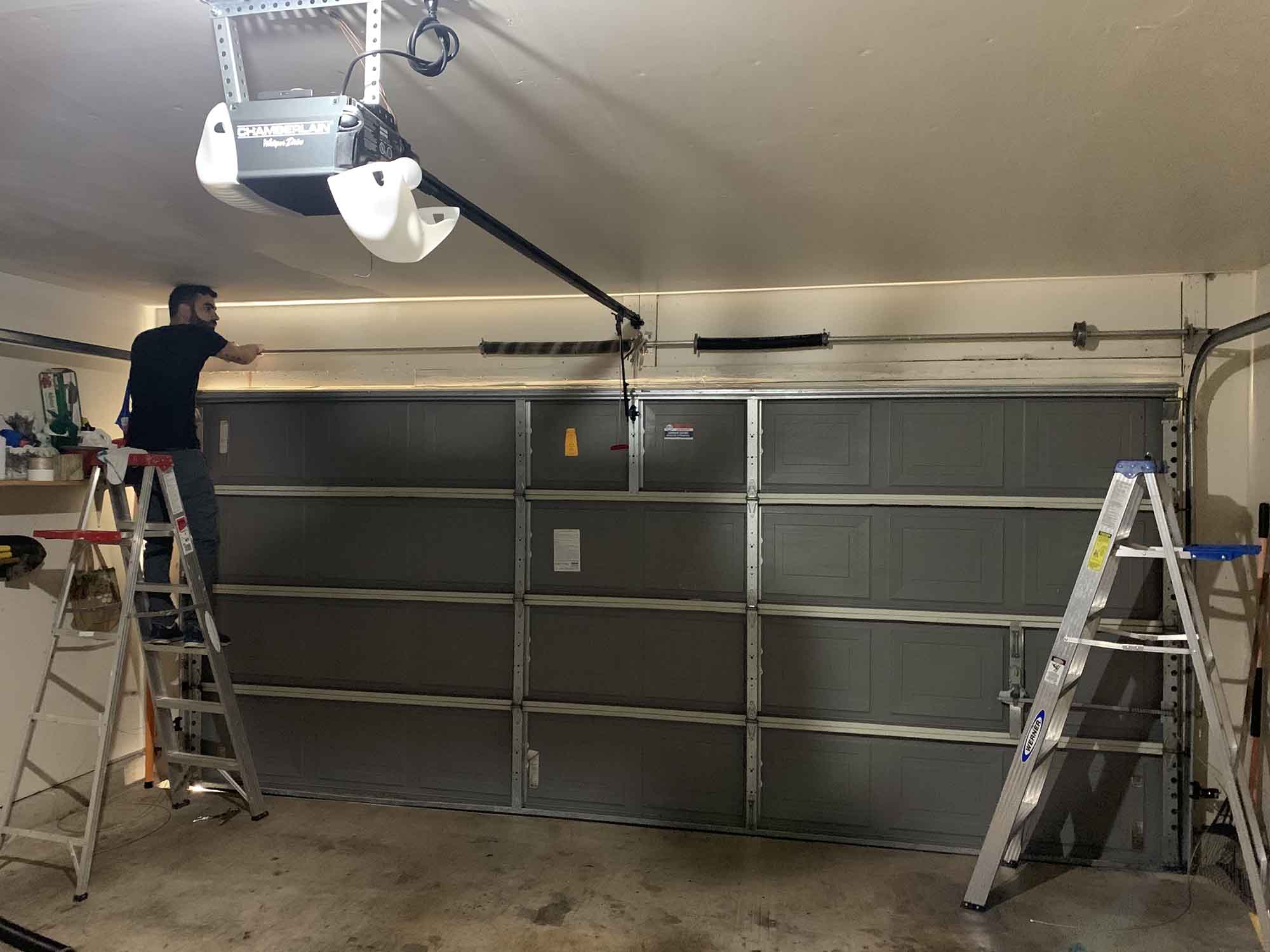
Broken or Worn Springs
Garage door springs support most of the door’s weight.
When springs weaken or break, the opener suddenly has to lift significantly more weight than it was designed to handle. Homeowners often believe the opener itself is failing when the underlying issue is actually related to garage door spring problems.
Springs experiencing wear may contribute to:
- Slower door movement
- Increased motor strain
- Excessive vibration
- Incomplete opening cycles
- Difficulty lifting the door manually
Worn Rollers
Rollers help the door travel smoothly along the tracks.
As rollers age, friction increases, forcing the opener to work harder during operation.
Common symptoms include:
- Grinding noises
- Jerky movement
- Vibration
- Uneven travel
- Increased strain on the opener
Garage Door Cable Problems
Cables play an important role in maintaining balanced movement.
Damaged, stretched, or frayed cables may cause uneven lifting and place additional stress throughout the system, leading to common garage door cable problems.
Warning signs may include:
- Crooked movement
- Door imbalance
- Increased opener effort
- Unusual noises
- Inconsistent operation
Poor Lubrication
Lack of lubrication increases friction between moving components.
Dry hinges, garage door rollers, bearings, and springs create friction that gradually affects performance. Many homeowners overlook garage door lubrication, even though it is one of the simplest maintenance tasks that can improve operation.
Insufficient lubrication may cause:
- Squeaking noises
- Slower movement
- Increased wear
- Additional strain on the opener
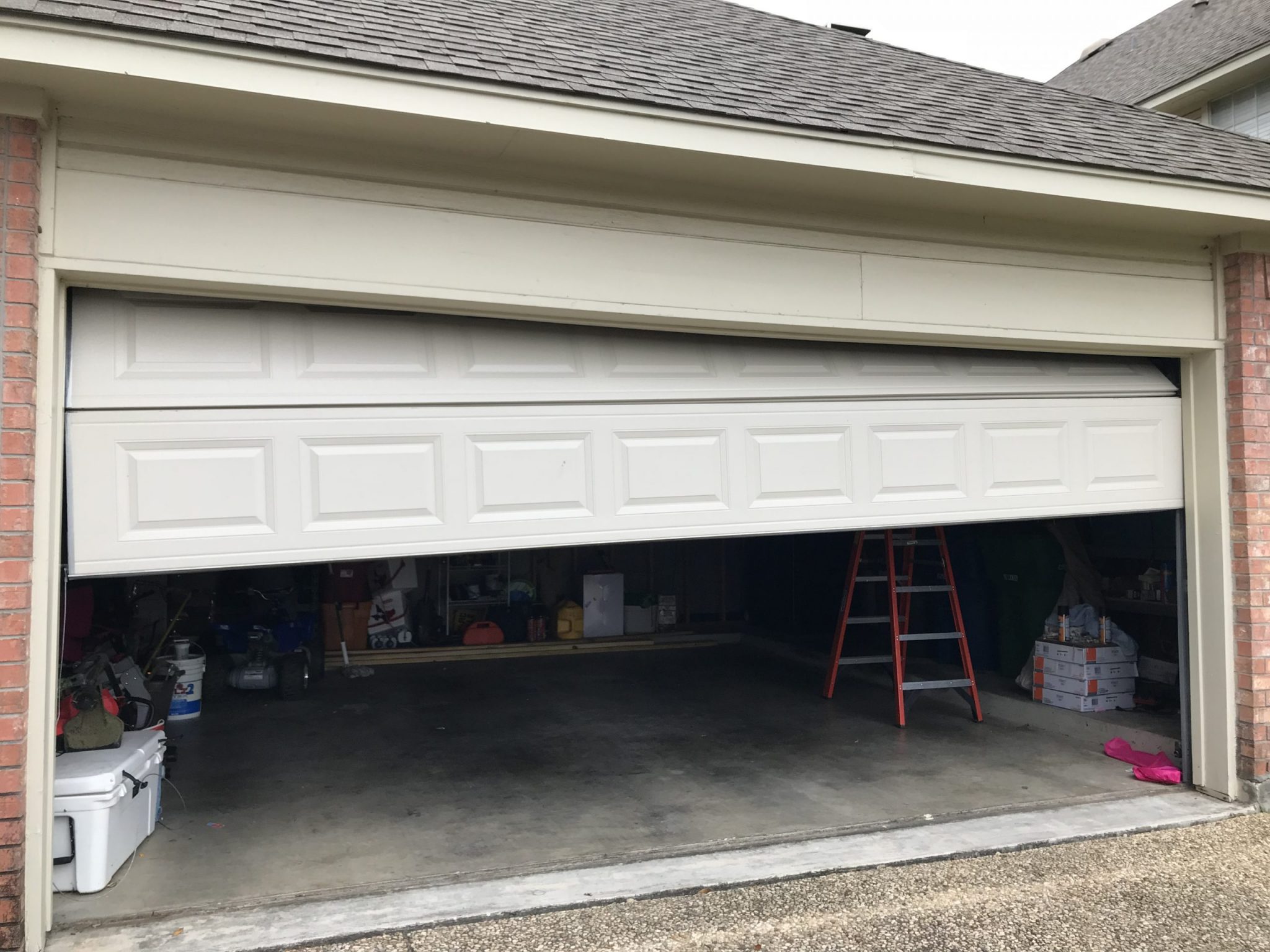
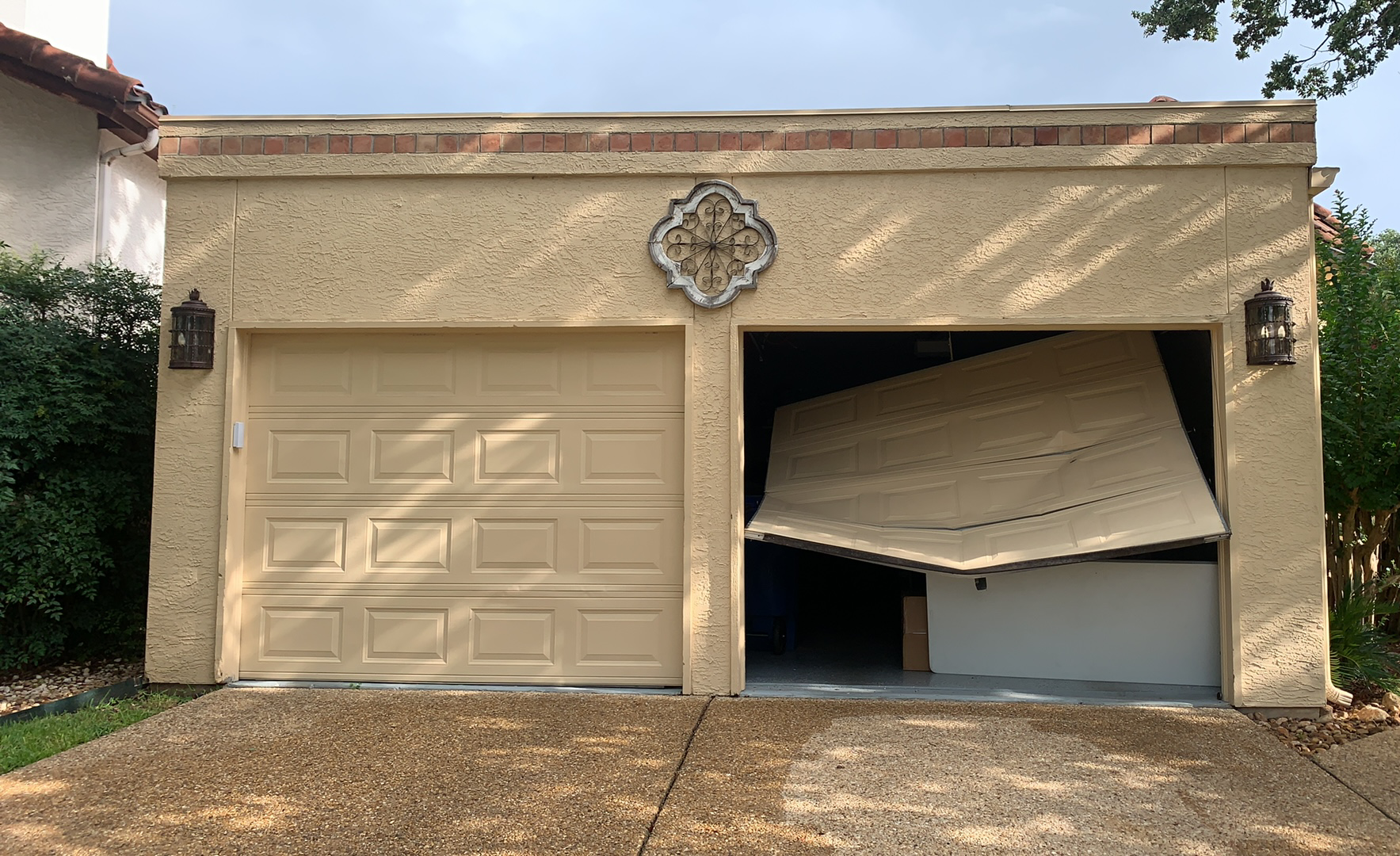
Garage Door Off Track Issues
Even minor track misalignment can affect opener efficiency.
As the opener attempts to pull a misaligned door, additional strain develops.
Common indicators include:
- Binding during operation
- Uneven movement
- Scraping sounds
- Gaps between rollers and tracks
- Increased vibration
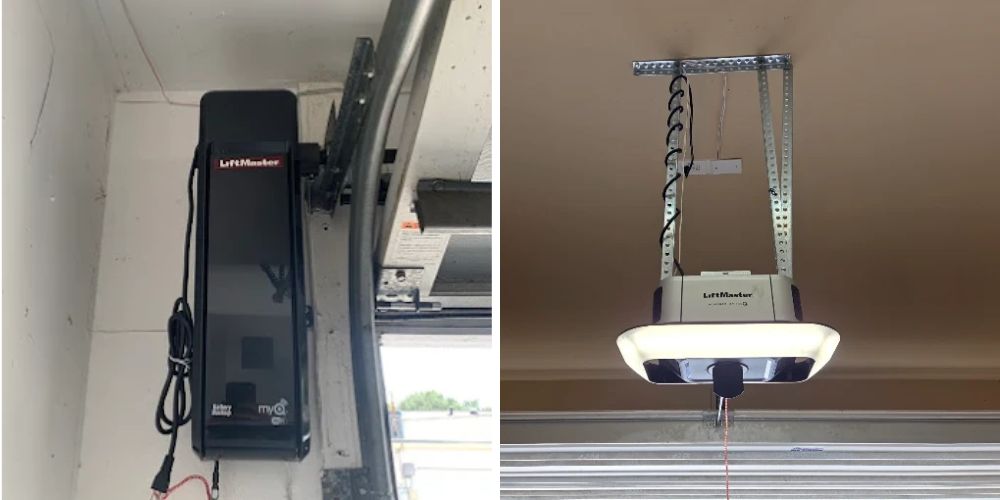
Aging Opener Components
Garage door openers eventually wear out.
Over time, gears, drive systems, electronic components, and internal mechanisms may become less effective.
Older units often experience:
- Reduced lifting power
- Inconsistent performance
- Electrical problems
- Frequent interruptions
- reduced reliability
Signs Your Garage Door Opener May Be Under Strain
Garage door opener issues rarely occur without warning.
Several symptoms may indicate the system is working harder than it should.
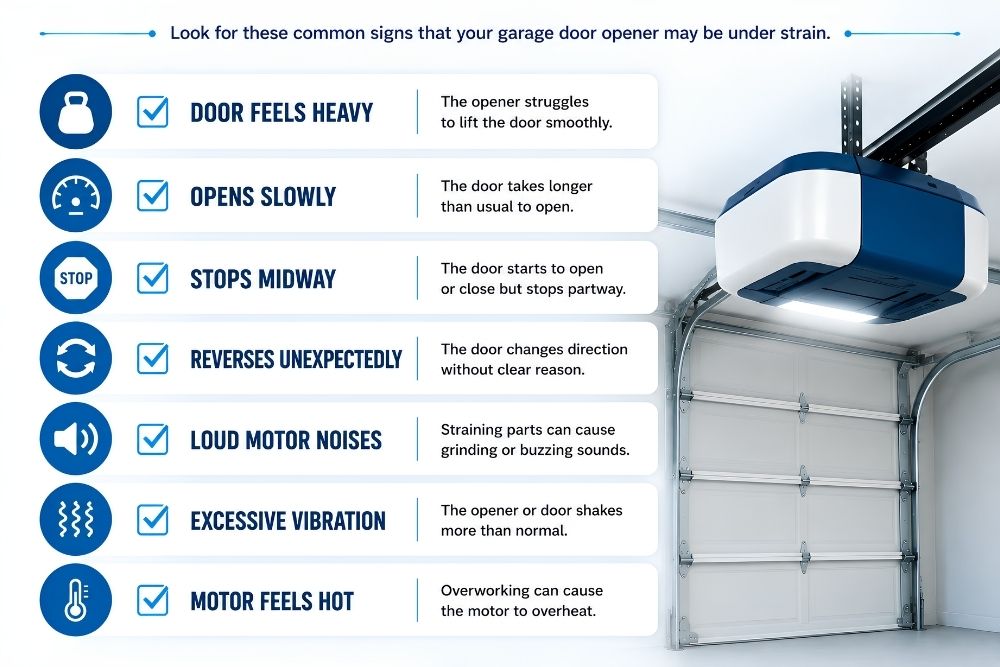
The Door Opens More Slowly
Reduced operating speed is often one of the earliest warning signs.
The opener may hesitate, move inconsistently, or require additional time to complete its cycle.
The Door Feels Heavy
A properly balanced garage door should feel relatively easy to lift manually.
If the door suddenly feels heavier than usual, the system may be out of balance, causing the opener to work harder during operation.
The Door Stops Halfway
Garage door openers include safety mechanisms that respond to excessive resistance.
When the opener encounters strain, it may stop before reaching its full travel range.
The Door Reverses Unexpectedly
Unexpected reversal can occur when the opener detects unusual force or imbalance.
Safety features are designed to prevent damage and reduce injury risks.
Excessive Vibration
Unbalanced movement may create vibration throughout the system.
This often indicates additional stress on the opener and supporting hardware.
The Motor Runs but the Door Does Not Move
One of the most frustrating issues homeowners experience is hearing the opener activate while the door remains stationary.
This symptom may point toward:
- Broken springs
- Worn gears
- Disconnected trolley assemblies
- Drive system issues
- Severe imbalance
Why Does the Motor Run but the Door Not Move?
Several issues can prevent the door from moving even though the opener is operating.
Broken Springs
A failed spring can prevent the opener from lifting the door effectively and may require professional replacement.
Disconnected Trolley
The trolley connects the opener to the garage door.
If it disengages, the motor can continue operating while the door remains in place.
Gear Wear
Internal gears transfer power from the motor to the drive system.
Over time, excessive strain can accelerate wear and reduce performance.
Drive System Problems
Chain-drive, belt-drive, and screw-drive systems all rely on properly functioning components.
Wear, looseness, or damage can prevent smooth movement.
Can You Improve Garage Door Opener Performance?
In many cases, the issue is not insufficient opener power but increased resistance elsewhere within the system.
Homeowners can often improve performance by:
- Lubricating moving components regularly
- Inspecting springs periodically
- Replacing worn rollers
- Checking cable condition
- Monitoring door balance
- Cleaning tracks
- Addressing unusual noises promptly
- Scheduling professional inspections
A properly balanced door generally requires much less effort from the opener.
Repair or Replacement: How to Decide
| Problem | Repair May Help | Replacement May Be Better |
| Worn gears | ✓ | — |
| Sensor issues | ✓ | — |
| Remote problems | ✓ | — |
| Frequent breakdowns | — | ✓ |
| Aging opener (10–15+ years) | — | ✓ |
| Failing safety features | — | ✓ |
| Declining performance | — | ✓ |
Repairs are often effective when issues involve damaged gears, sensor failures, electrical concerns, or travel limit adjustments.
However, recurring problems may indicate the need for garage door opener replacement, particularly if the system is approaching the end of its expected lifespan.
Modern openers often provide quieter operation, improved safety features, and greater convenience.
How to Prevent Garage Door Opener Problems
Preventive garage door maintenance remains one of the most effective ways to avoid unexpected failures.
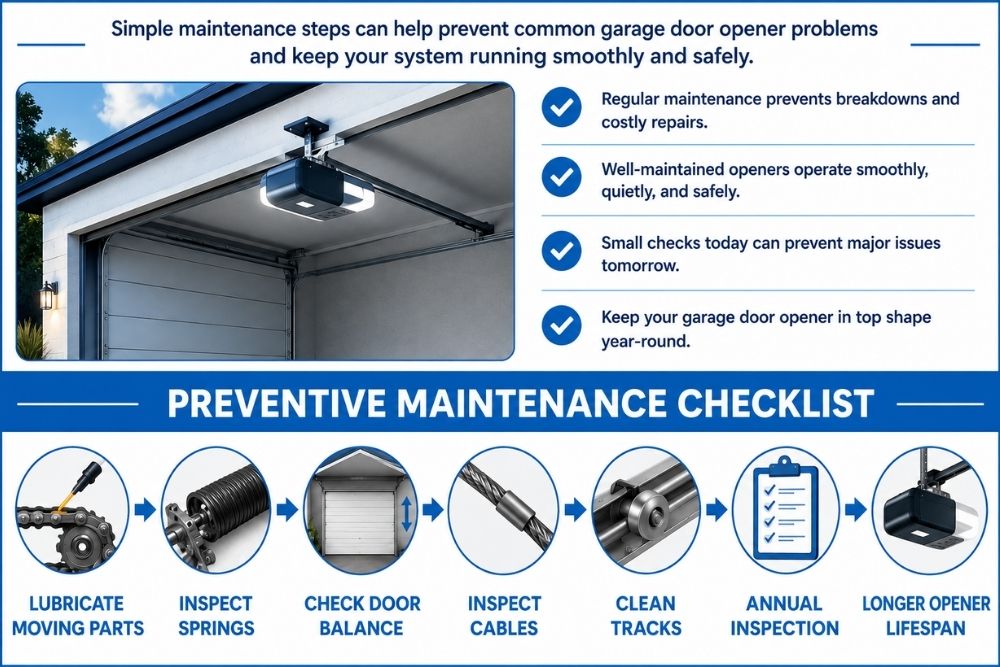
Homeowners can help extend opener lifespan by:
- Lubricating moving parts regularly
- Testing door balance periodically
- Monitoring cables
- Checking balance
- Cleaning tracks
- Scheduling annual inspections
- Addressing unusual noises quickly
Routine maintenance frequently identifies small concerns before they develop into expensive repairs.
Conclusion
Garage door opener problems often develop gradually rather than appearing suddenly. Slower movement, increased resistance, unusual noises, and inconsistent operation frequently indicate that another component within the system requires attention.
Imbalance, worn components, friction, and normal wear can all contribute to declining performance over time. Identifying these warning signs early can help homeowners avoid unexpected breakdowns, reduce repair costs, and maintain dependable operation.
If your opener seems weaker than usual, struggles to lift the door, or no longer operates consistently, a professional inspection can help determine the cause and identify the most effective solution.
FAQ
Why does my garage door struggle to open?
Common causes include worn springs, poor lubrication, cable issues, track misalignment, and aging opener components.
Why is my garage door opener so weak?
An opener may appear weak because increased resistance elsewhere in the system is forcing it to work harder than intended.
Why is my garage door making noise but not moving?
Broken springs, disconnected trolleys, damaged gears, and drive system issues are among the most common causes.
Can broken springs affect opener performance?
Yes. Springs support most of the door’s weight, and the strain on the opener often increases significantly after spring failure.
How can I prevent garage door opener problems?
Regular inspections, lubrication, balance checks, and routine maintenance can help extend opener lifespan and reduce unexpected repairs.