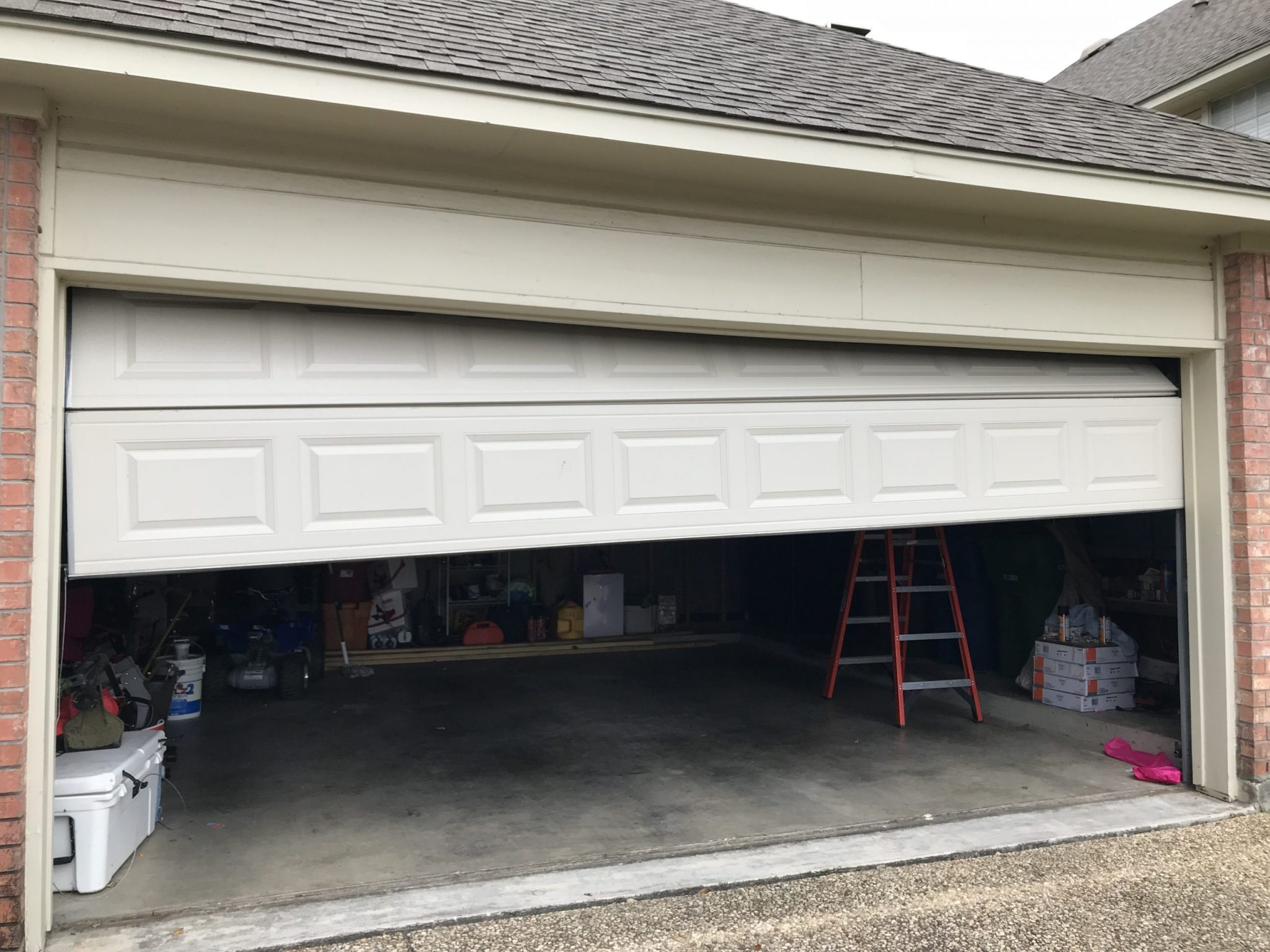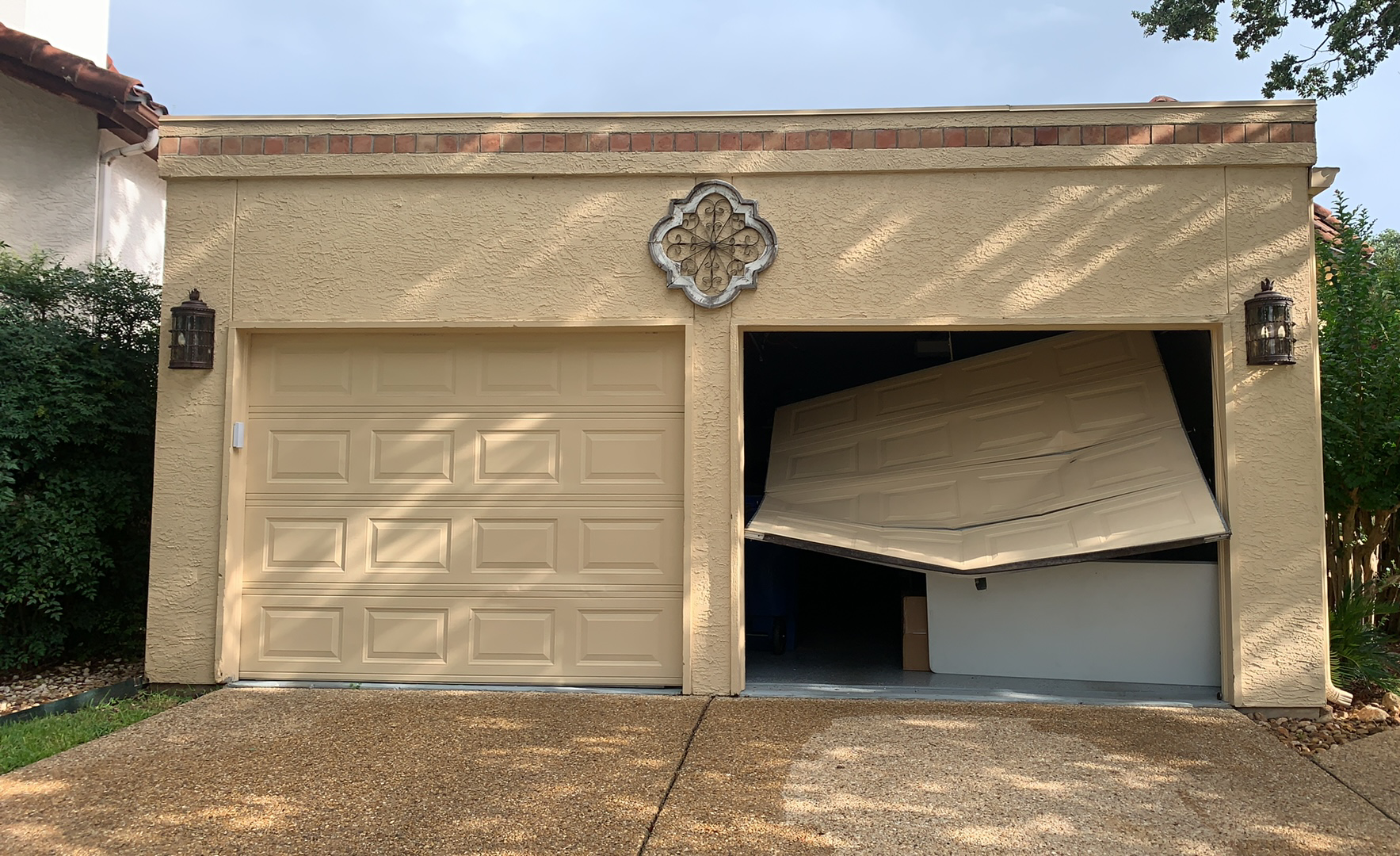
Most opener comparisons start with noise. When you replace an opener, the first question is a practical one: what will your garage physically take? A rail opener needs room above the door. A wall-mount opener needs a particular spring system and room beside the door. Only once you know which types fit does the choice between belt and chain come in.
If you are not yet sure the old opener has to go, start with the warning signs that an opener needs replacing. Our garage door opener page describes the opener types.
Quick answer
Chain and belt openers both hang from the ceiling and pull the door along a rail, so they need room above the highest point the door reaches. A wall-mount opener sits beside the door and turns the torsion bar, so it needs torsion springs on a bar above the door, space at the end of that bar and an outlet nearby. In return it leaves the ceiling clear. Between chain and belt, the deciding factor is usually noise. Whatever you choose, the door has to be balanced by its springs first.
Two ways an opener moves a door
Rail openers. The motor hangs from the ceiling, and a rail runs from it to the wall above the door. A trolley travels along the rail and pulls the door by an arm attached to the top section. A chain, a belt or, on screw-drive models, a threaded steel rod moves the trolley.
Wall-mount openers. These are also called jackshaft or side-mount openers. The unit mounts on the wall beside the door and connects to the end of the torsion bar, the steel shaft above the door that carries the springs. It turns the bar, and the bar turns the cable drums that lift the door. There is no rail.
In both cases the springs carry the weight of the door. The opener only moves a door that the springs already balance.
Start with the garage: what to look at
You can answer most of these from the floor, with the door closed and without touching anything.
What kind of springs does the door have?
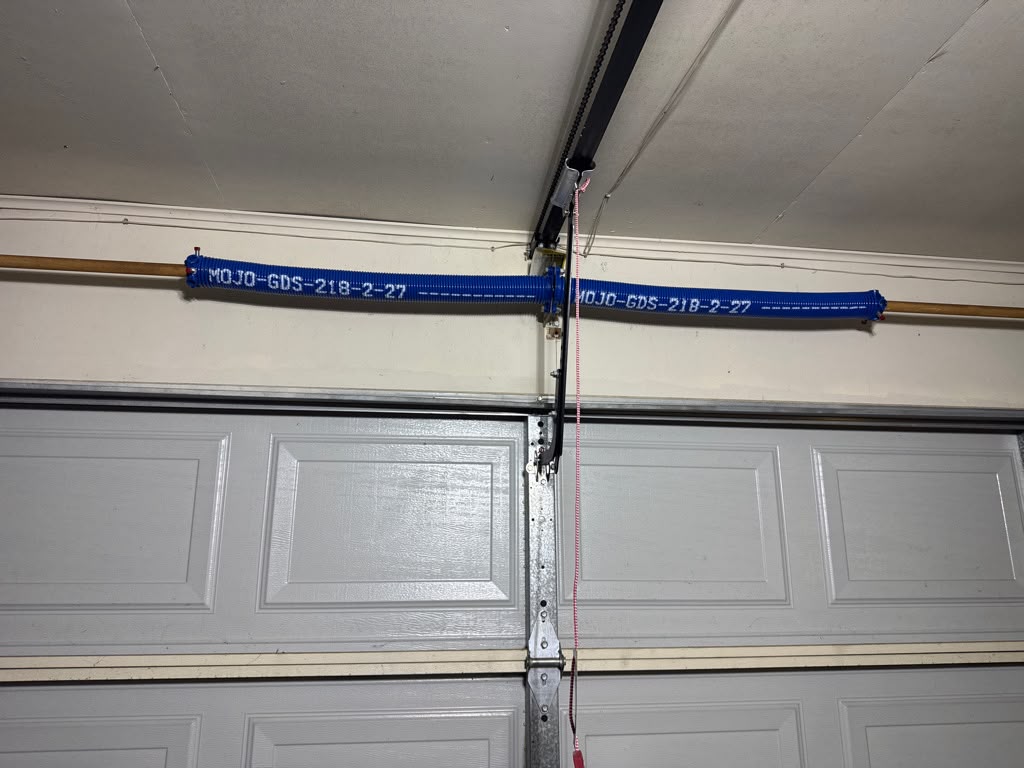
Look above the closed door. Torsion springs are coiled around a bar that runs across the wall above the door. Extension springs run alongside the horizontal tracks on each side, toward the back of the garage.
A wall-mount opener needs torsion springs. The installation manual for one wall-mount model, LiftMaster’s 8500W, says it is for sectional doors with torsion assemblies only, and not for doors that use extension springs or for low-headroom tracks with an outside pickup drum. If your door has extension springs, a rail opener is the straightforward choice. Our guide to torsion and extension springs explains the difference.
Is there room beside the door?
A wall-mount opener needs space at the end of the torsion bar and an outlet within reach. For the 8500W, the manual asks for at least 8.5 inches between the end of the torsion bar and the side wall or any obstruction, at least 3 inches between the ceiling and the center of the bar, and an outlet within 6 feet. Other models set their own figures, so treat these as an example. A side wall, a water heater or shelving close beside the door can rule a wall-mount out.
Is there room above the door, and what is on the ceiling?
A rail opener’s rail is mounted above the highest point the door reaches as it opens. For a sectional door, the example chain-drive manual tells the installer to locate the door’s highest point of travel and mark the header-bracket line 2 inches above it. Where there is too little height on the wall, the bracket can go on the ceiling instead. Rails also come in different lengths, and a taller door travels farther, so give the door’s height when you ask for a quote.
Then look at what else is up there: storage racks, light fixtures, a car lift. A wall-mount opener leaves the center of the ceiling clear.
What is the door made of?
Lightweight doors need extra support where a rail opener’s arm attaches. The chain-drive manual says fiberglass, aluminum and lightweight steel doors, and doors with glass panels, need horizontal and vertical reinforcement of the top section before the door bracket goes on. A one-piece tilt-up door is a different case: manuals limit which features can be used with it, and the wall-mount model is for sectional doors only.
Is there an outlet in the right place?
Both types plug into a grounded outlet near the motor, which for a rail opener hangs from the ceiling and for a wall-mount sits beside the door. If there is no suitable outlet, the manuals say to have a qualified electrician install one.
Then the household: chain or belt?
Once you know a rail opener fits, the choice between chain and belt is mostly about sound. A metal chain is louder than a belt, which matters most with a bedroom over the garage or a living room beside it. In a detached garage it matters much less.
Features to decide at the same time
Safety sensors. Under the federal safety standard, openers manufactured for sale in the US on or after January 1, 1993 need a second layer of protection against closing on someone, such as the pair of photo-eye sensors near the floor. If your current opener has none, that alone is a good reason to replace it.
Battery backup. An opener with a battery backup keeps working for a limited time when the power goes out. DASMA, the door manufacturers’ association, says the backup should be tested periodically and that the battery will need replacing after two to five years, depending on use and type.
Phone control and timed closing. Many new openers can close the door from an app or on a timer. Opener manuals restrict these unattended-closing features to sectional doors. They are not to be used with one-piece or swinging doors.
Wall-mount extras. The 8500W manual requires a cable tension monitor, which watches for slack in the lift cables and reverses the door, and the door will not close unless it is connected. The same model offers an automatic lock that stops the door from being opened by hand once it is closed. Other wall-mount models may differ, so ask what the one you are quoted includes.
Before the new opener goes on, the door must be balanced
DASMA’s opener guidance is plain: openers are designed for properly balanced doors, and a stronger motor does not fix a door that is out of balance. The federal standard requires opener manuals to tell owners to install an opener only on a properly balanced door and to have a qualified service person repair cables, spring assemblies and other hardware. The wall-mount manual adds that the product is intended for installation by trained garage door technicians and may require adjustments to the door’s springs or tracks.
So ask the technician to check the door’s balance and the springs before the new opener is fitted, and to test the safety reversal once it is in. The manuals say the reversal system must be tested after any adjustment.
What to have ready for the estimate
- The current opener’s brand and model, if you can read the label from the floor
- Which springs the door has, and the door’s height
- What is on the ceiling and on the walls beside the door
- Whether there is a room above the garage
- The features you want: quiet running, battery backup, phone control
Frequently asked questions
Can any garage door take a wall-mount opener?
No. The model described above is for sectional doors with torsion springs, and it needs room at the end of the torsion bar. Doors with extension springs, or with certain low-headroom track setups, are ruled out for that model.
Do I need a new opener when I get a new garage door?
Not always. If it is in good condition and has working safety sensors, it can often stay. See question 5 in our questions to ask a garage door installer.
My opener is acting up. Does it need replacing?
Maybe not. A single failed part, such as a sensor, a drive gear or a circuit board, can often be repaired. Describe what the opener does when you call.
Does Mojo replace garage door openers in my area?
Our service areas page lists the communities around San Antonio. Not sure about your address? Call and ask.
Replacing a garage door opener in the San Antonio area?
Call Mojo Garage Door Service at 210-997-7777 for our Hillpoint Dr location or 210-640-9456 for Culebra Rd, or send us a message, and we can talk through which type of opener fits your garage. Our garage door opener page describes the opener types.
Find us on Google Maps: 10810 Hillpoint Dr, San Antonio or 8034 Culebra Rd, Ste 118, San Antonio.