Table of Contents
A new garage door is something you will look at, and listen to, several times a day for many years. Quotes for one are hard to compare, because each describes “a 16 by 7 insulated steel door” and means something different.
These eight questions make the quotes comparable. Seven are for the installer, and you should ask every installer the same ones, including us. One is for your HOA and your city. Our garage door installation page lists the brands we install.
Quick answer
Get the exact door model in writing, with its insulation value and its wind rating. Ask what hardware and springs are included, whether your opener will be reused, who does the work, and what could change the price. Check your HOA rules before you order, not after.
1. Exactly which door is in the quote?
Ask for the manufacturer, the model or series name, the steel thickness, the number of layers in the panel, the color and the window option. Two doors that look alike in a photo can be a single sheet of steel or a three-layer insulated panel. With the model name you can look the door up on the manufacturer’s site yourself.
Hail is worth a question here too. On April 12, 2016, the National Weather Service logged multiple reports of hail two to three inches across just north of downtown San Antonio, and the largest stone reported measured 4.5 inches. Ask whether a single damaged section can be replaced later without replacing the whole door.
2. How is it insulated, and what is the R-value?
R-value measures how well the door resists heat passing through it. A higher number means more insulation. Doors injected with polyurethane foam generally reach higher R-values for the same thickness than doors with polystyrene panels. R-values are worked out for the panel, not for the whole installed door, so compare like with like.
In San Antonio this is mostly a comfort question. The normal high in early August is 97°F, according to National Weather Service records, and a garage door that faces west takes the afternoon sun. Insulation matters most if there is a bedroom over the garage, if you work in the garage, or if the garage shares a long wall with the house.
If you want a dark color on a door that gets full sun, ask one more thing. Insulated steel doors can bow when the outside face is much hotter than the inside face. DASMA, the door manufacturers’ association, describes this as normal rather than a defect, says dark doors facing the sun show it more, and says it can be kept small with reinforcement such as struts across the back of the door. Ask whether the door you are choosing needs them.
3. What wind load is the door rated for?
A garage door is a large, flat surface for wind to push on. The residential building code requires garage doors to be tested for wind load, and the current code also requires a permanent label showing the pressure the door is rated for. The City of San Antonio has used the 2024 edition of that code since May 2025.
The rating is a pressure in pounds per square foot, not a wind speed. Ask the installer to confirm in writing that the quoted door meets what your city requires at your address, and ask to see the label once the door is in.
Thunderstorms are the reason to care. The National Weather Service office for Austin and San Antonio notes that straight-line winds of 60 to 80 mph and more can do significant damage to property.
4. Are new tracks, hardware and springs included?
Ask whether the quote includes new tracks, rollers, hinges, cables and springs along with the door panels, or whether any of your old hardware is being reused, and why.
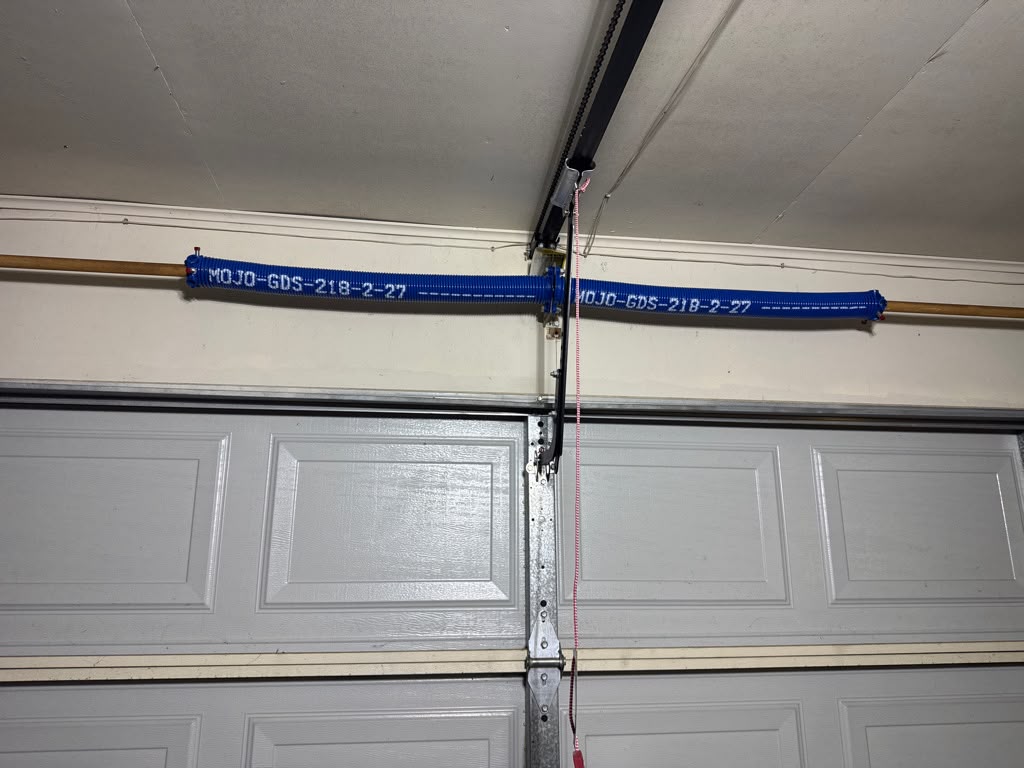
Ask about the springs in particular. Springs have to be matched to the weight of the new door, and they are rated in cycles, one cycle being one open and one close. Door makers say most residential springs are designed for about 10,000 cycles. If your household uses the garage as its front door, ask what a higher-cycle spring would add to the quote.
5. Will my current opener work with the new door?
Often it will, if it is in good condition and has working safety sensors. The springs carry the weight of the door, not the opener. DASMA’s guidance is that a stronger opener is not the answer to a heavy door: the door has to be balanced by its springs.
Ask the installer to check the opener during the visit and to say whether replacing it now makes sense. If you are weighing that, our garage door opener guide explains the types.
6. Who does the work, and what happens to the old door?
Ask whether the people who install the door work for the company you are hiring. Ask whether removal and disposal of the old door are included, and how the garage will be left at the end of the day.
Location matters here as well. A company with a real local address is one you can go back to, and one that is easier to reach when the door needs service. Our guide to finding garage door repair near you in San Antonio shows how to check that.
7. Do I need approval from my HOA, or a city permit?
This one is for you rather than the installer.
If you live in a subdivision with a homeowners association, you probably need its approval. Deed restrictions often cover the color and style of a garage door and whether it can have windows, and approval can take time. Send in the request before you place the order. A door ordered in a color the committee rejects is an expensive mistake.
On permits, the City of San Antonio’s list of work that typically needs no permit includes replacing existing doors, and its residential repair form says like-for-like door replacement needs none. The City’s pages do not mention garage doors by name. Changing the size of the opening does need a permit, wiring for a new opener outlet is electrical work with its own permit, and homes in historic or conservation districts have design rules of their own. Other cities set their own rules. Ask your installer, and confirm with your city’s building department.
8. What is the total, in writing, and what could change it?
Ask for one written total that includes the door, hardware, labor, removal of the old door and tax. Then ask what could change that number once work begins, for example rotted wood around the opening, too little headroom above the door for standard tracks, or no outlet for a new opener.
Ask whether those are checked during the measuring visit, before the door is ordered.
A little preparation before the estimate
- Measure the width and height of the opening, and the space between the top of the opening and the ceiling.
- Take photos of the door from outside and of the tracks and opener from inside.
- Note which way the garage faces and whether there is a room above it.
- Find your HOA’s rules on garage doors, if you have an HOA.
- Decide what matters most: quiet, insulation, looks or budget.
If you are still deciding whether the door needs replacing at all, read repair or replace: your garage door guide first.
Frequently asked questions
Does it matter if a garage door installer is near me?
Less than for an emergency repair, but it still matters. Someone has to come out and measure, and you want a company close enough to come back for adjustments and service.
What should the quote say about insulation?
The R-value of the door section, the type of insulation, and the thickness of the panel. Without those three, two “insulated” doors cannot be compared.
What size garage door do I have?
Measure the opening. Common sizes are covered in our guide to garage door sizes.
Planning a new garage door in the San Antonio area?
Call Mojo Garage Door Service at 210-997-7777 or send us a message to arrange an estimate, and have these eight questions ready. Our garage door installation page shows the doors we install.