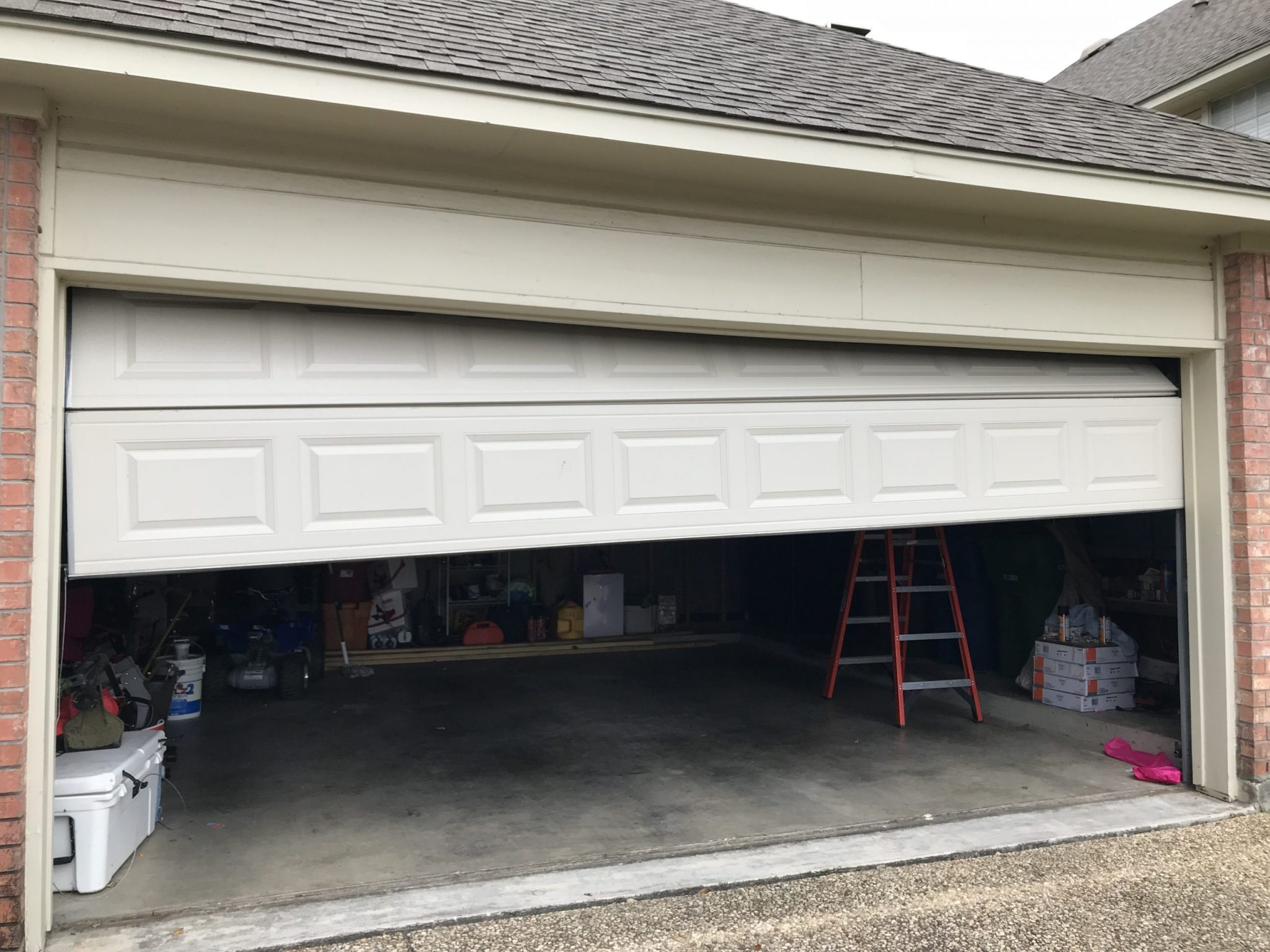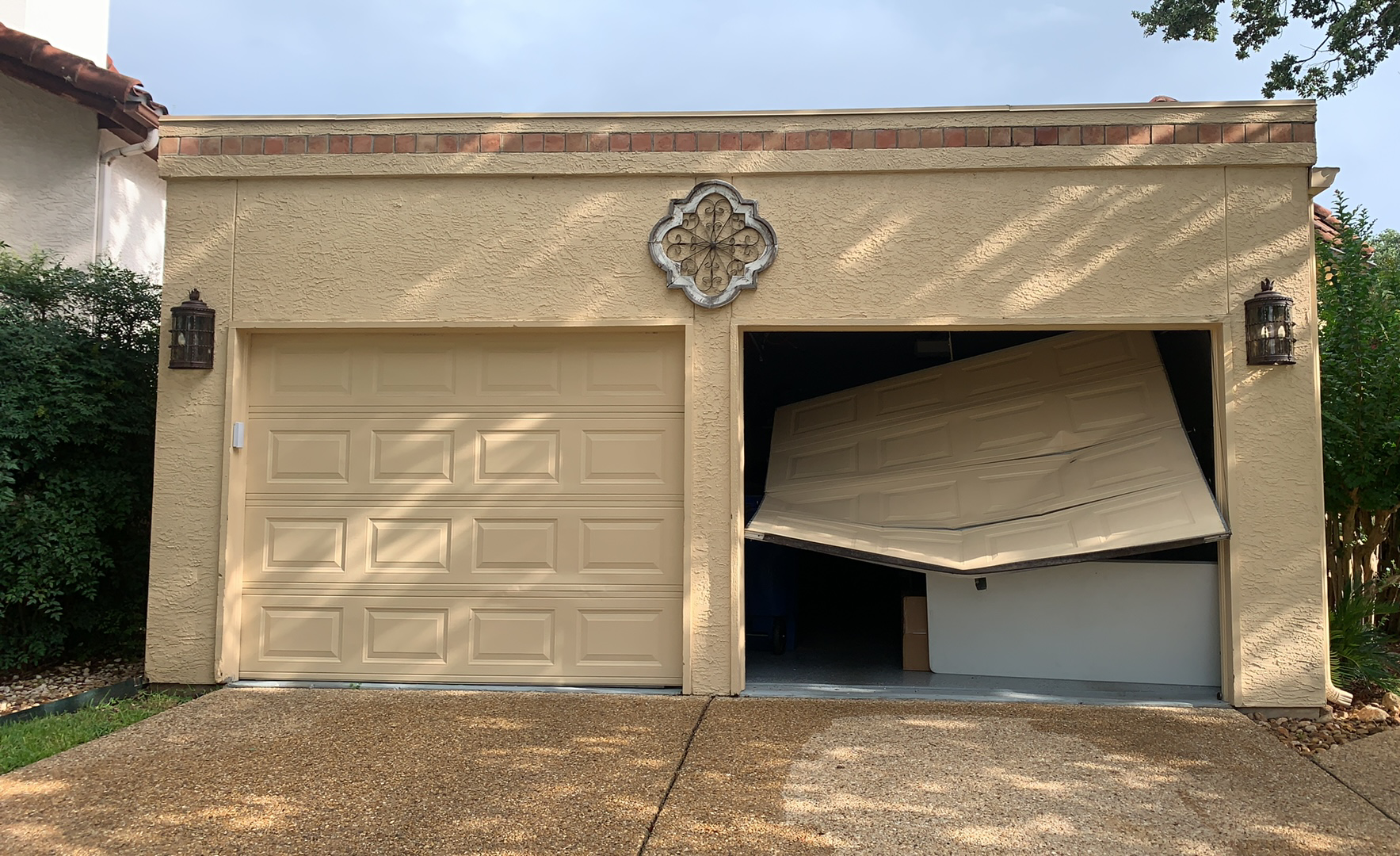
Your opener clicks, hums, blinks or does nothing at all, and you are about to search for garage door opener repair near you. Give it five minutes first. Some “dead opener” calls turn out to be a tripped outlet, a locked wall control, a sensor knocked out of line, or a door problem that no opener could overcome.
The six checks below need no tools, and none of them involve touching the springs or cables. If they do not solve it, you will be able to tell the technician exactly what the opener is doing. What we repair and install is on our garage door opener service page.
Quick answer
Check the power, the Lock button on the wall control, the remote battery, the two safety sensors, the red release cord and the balance of the door. If the door is heavy when you lift it by hand, stop there. That is a spring problem, not an opener problem, and it needs a technician.
Six safe checks, in order
1. Is the opener getting power?
Look for any light on the motor unit or on the wall control. If everything is dark, check that the opener is plugged in, then check the breaker and press Reset on any GFCI outlet in the garage, since the ceiling outlet may be on the same circuit.
2. Is the wall control locked?
Many LiftMaster and Chamberlain wall controls have a Lock button. When it is on, the remotes stop working while the wall button still does, and the light on the wall control flashes. Press and hold Lock for about two seconds to switch it off.
3. Does the wall button work when the remote does not?
Then the motor is fine and the fault is on the remote-control side. Start with a fresh battery. For an outside keypad, see our keypad troubleshooting checklist. For a remote that will not program, see our remote control service page.
4. Are both safety sensors lit and facing each other?
With the door open, each of the two small sensors near the floor shows an indicator light. On LiftMaster and Chamberlain units the sending sensor glows amber and the receiving sensor glows green. If one is off or flickering, wipe both lenses, clear the beam and straighten the bracket. On these brands, a door that will not close while the opener’s lights flash ten times usually points to the sensors. Our guide to why a garage door will not close covers sensors in detail.
5. Has the red release cord been pulled?
If the motor runs and the chain or belt travels but the door stays where it is, look at the red cord hanging from the rail. Pulling it disconnects the door from the opener, and it is easy to do by accident. With the door fully closed, reconnect it the way your opener’s manual describes, because the motion differs from model to model. Then run the opener once. You should hear the trolley click back onto the door.
6. Is the door itself too heavy?
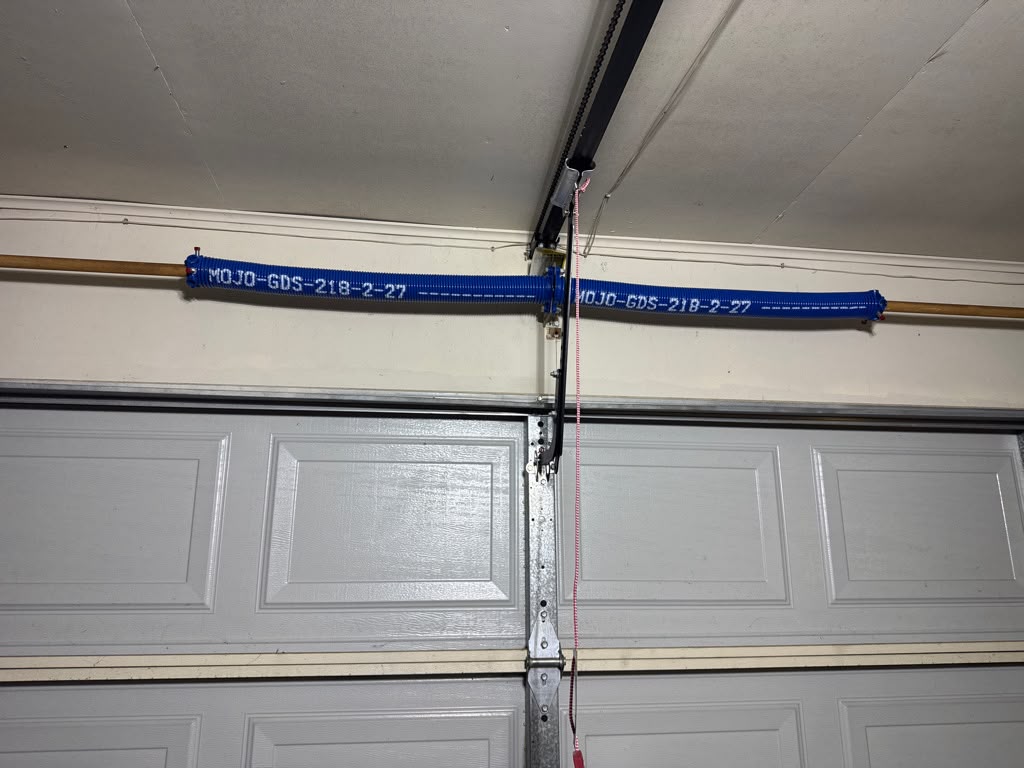
This is the check that matters most. First look up at the spring and at the cables beside the door. If you see a gap in the spring or a slack cable, skip this check and call.
If everything looks intact and the door is fully closed, pull the red release cord, then lift the door by its handle, not by the cord. Stop and set it down the moment it feels heavy. If it lifts easily, raise it to about waist height and ease your grip, with your feet back from the door. A balanced door stays put or drifts slowly. If it drops or shoots up, the springs need a technician.
Then lower the door and reconnect the opener. DASMA, the door manufacturers’ association, is blunt about this: a more powerful opener is not the answer to a heavy door. A door that fails this check needs spring repair, and that is not a do-it-yourself job.
What the symptom usually means
| What you see | Usually points to | Where to start |
|---|---|---|
| No lights, no sound | No power at the outlet, or a failed circuit board | Check 1 |
| Motor runs or hums, door does not move | Release cord pulled, a broken spring or a locked door, or a worn drive gear | Checks 5 and 6 |
| Door starts down, reverses, lights flash | Safety sensors blocked, dirty or out of line | Check 4 |
| Works from the wall, not from the remote | Remote battery, programming, or Lock is on | Checks 2 and 3 |
| Door lifts a few inches and stops | Broken or worn spring | Stop using it and call |
| Door goes up crooked, or a cable hangs loose | Cable or track problem | Stop using it and call |
If you have a LiftMaster, our LiftMaster troubleshooting guide goes through that brand step by step, and why an opener struggles to lift the door explains the causes on the door side.
The low-sun problem: a door that refuses to close at the same time each day
If your door closes normally in the morning and refuses in the late afternoon, or the other way around, look at where the sun is. Low sun shining straight into the receiving sensor can drown out the beam, and the opener then behaves as if something is standing in the doorway. It shows up when the sensors face the low sun, and it comes and goes through the year as the sun’s angle changes.
The fix the manufacturers give is to swap the two sensors so that the receiver sits on the shaded side. If that is not enough, LiftMaster and Chamberlain sell a small sun shield for the sensor. On many openers you can close the door during those minutes by pressing and holding the wall button until the door is all the way down. If you do, make sure the doorway is clear and watch the door the whole way, because holding the button overrides the sensors.
After a storm or a power outage
A storm that knocks out the power can leave you with an opener that does nothing afterward. Work through it in this order.
- Power is out. Unless your opener has a battery backup, it will not run. To work the door by hand, pull the release cord only while the door is fully closed, then lift by the handle. Opener manuals warn against pulling the release on an open door, because a door with a weak or broken spring can come down fast. If the door is stuck open, see how to secure a garage door that is stuck open.
- Power is back, opener is dead. Repeat check 1. If the outlet has power and the opener shows no lights at all, the circuit board may have been damaged by a surge. That can sometimes be repaired without replacing the whole opener.
- Opener runs, door will not close. Storms blow leaves and trash cans into the sensor beam. Repeat check 4.
Repair or replace?
Repair makes sense when one part has failed, such as a gear, a sensor, a circuit board or a remote receiver, and the rest of the opener is sound.
Replacement is worth getting a quote for when the opener has no safety sensors at all, when parts for it are no longer made, or when you want something the old unit cannot offer, such as a battery backup or a quiet belt drive. Federal safety rules have required sensors, or an equivalent safeguard, on residential openers manufactured since January 1, 1993, so an opener with no sensors at all was almost certainly built before then.
Our guide to the 10 warning signs that an opener needs replacing goes deeper.
What to tell us when you call
- The brand and model, printed on a label on the motor unit
- What happens when you press the wall button, and what happens with the remote
- Whether the sensor lights are steady, blinking or off
- What the door did when you lifted it by hand
One note so nobody wastes a call: for questions about an opener’s app, account or registration, the manufacturer’s own help pages are the right place. Our opener service page lists what we work on.
Still choosing who to call? Our guide to garage door repair near you in San Antonio shows how to tell which companies are really local.
Frequently asked questions
Why does my garage door opener hum but not move the door?
Most often the release cord has been pulled, the door itself is too heavy or locked, or the drive gear inside the opener has worn out. Check the cord and the door first, and stop pressing the button while you do.
Why does my garage door only close when I hold the wall button?
Because the opener cannot see a clean signal between the two safety sensors, and holding the wall button overrides them. Clean and realign the sensors, and check for direct sun on the receiver. Do not leave it that way, since the sensors are what stop the door from closing on a person, a pet or a car.
Can I open my garage door during a power outage?
Yes, if the springs are in good shape. Pull the red release cord while the door is fully closed and lift the door by its handle. If it feels heavy, leave it closed and call for service.
Need opener repair in the San Antonio area?
Call Mojo Garage Door Service at 210-997-7777 or send us a message, and tell us what the six checks showed. Our garage door opener page lists the brands we repair and install.