Most people use their garage door several times a day without giving the opener much thought. Until it stops working. Whether you’re replacing an older unit, choosing your first opener, or simply trying to understand how these systems work, knowing the basics can save you time, money, and frustration.
A garage door opener does much more than lift and lower your garage door. The right system can make daily access easier, improve home security, reduce noise, and even connect with your smart home. Choosing the right opener also helps ensure reliable performance and a longer lifespan.
In this guide, you’ll learn how garage door openers work, the different drive systems available, the key components inside every opener, and the features to consider before buying one. We’ll also cover maintenance tips, common problems, and signs it may be time for a replacement.
What Is a Garage Door Opener?
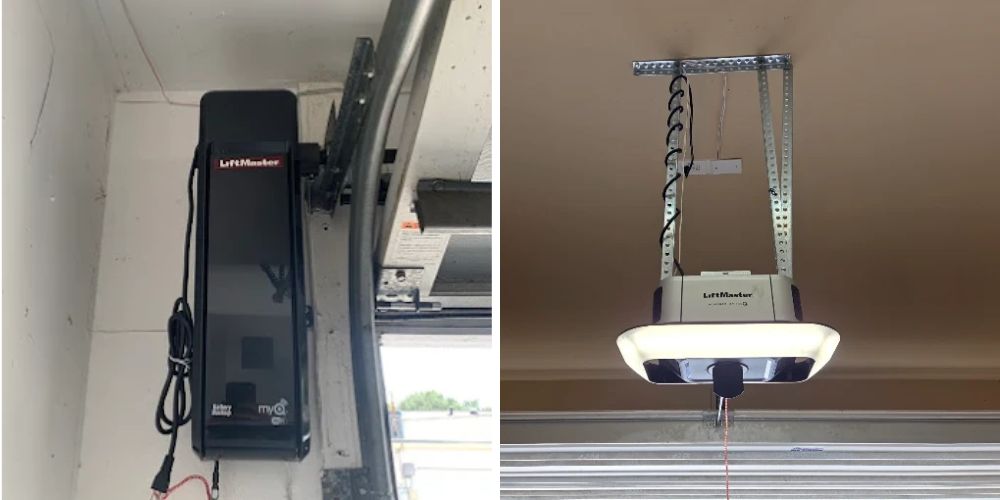
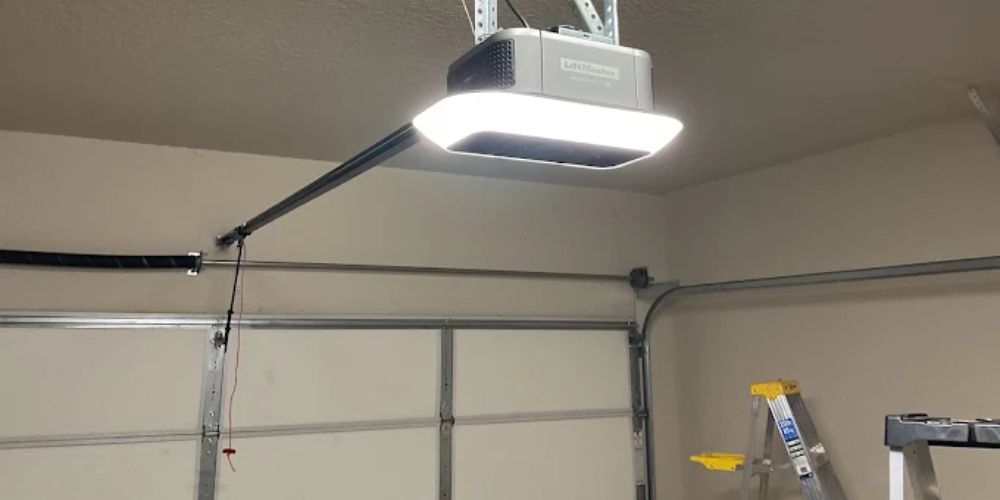
A garage door opener is a motorized device that automatically opens and closes a garage door using a wall button, remote control, keypad, smartphone app, or compatible smart home system. It works together with the garage door’s spring system, which supports most of the door’s weight while the opener guides its movement.
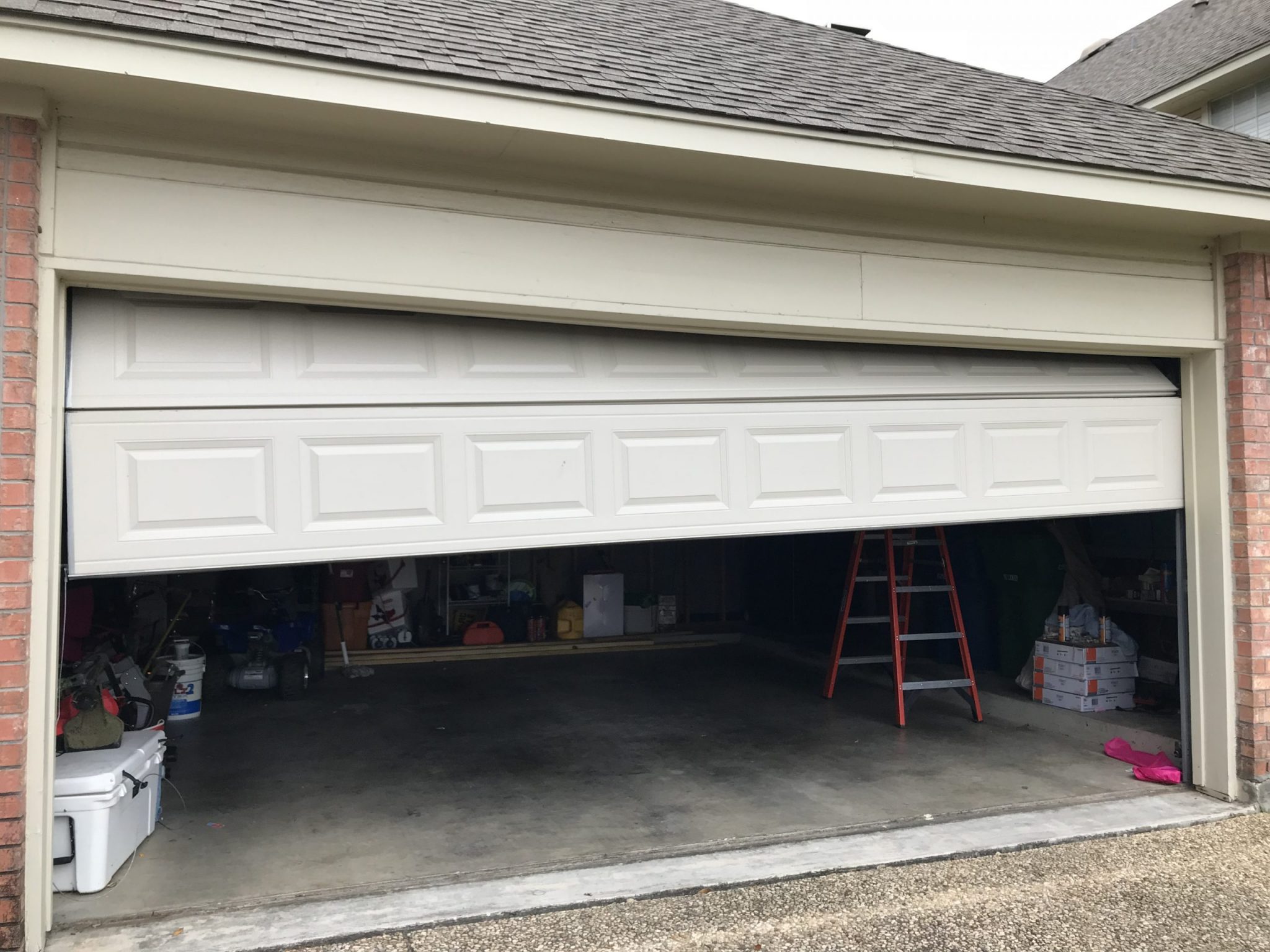
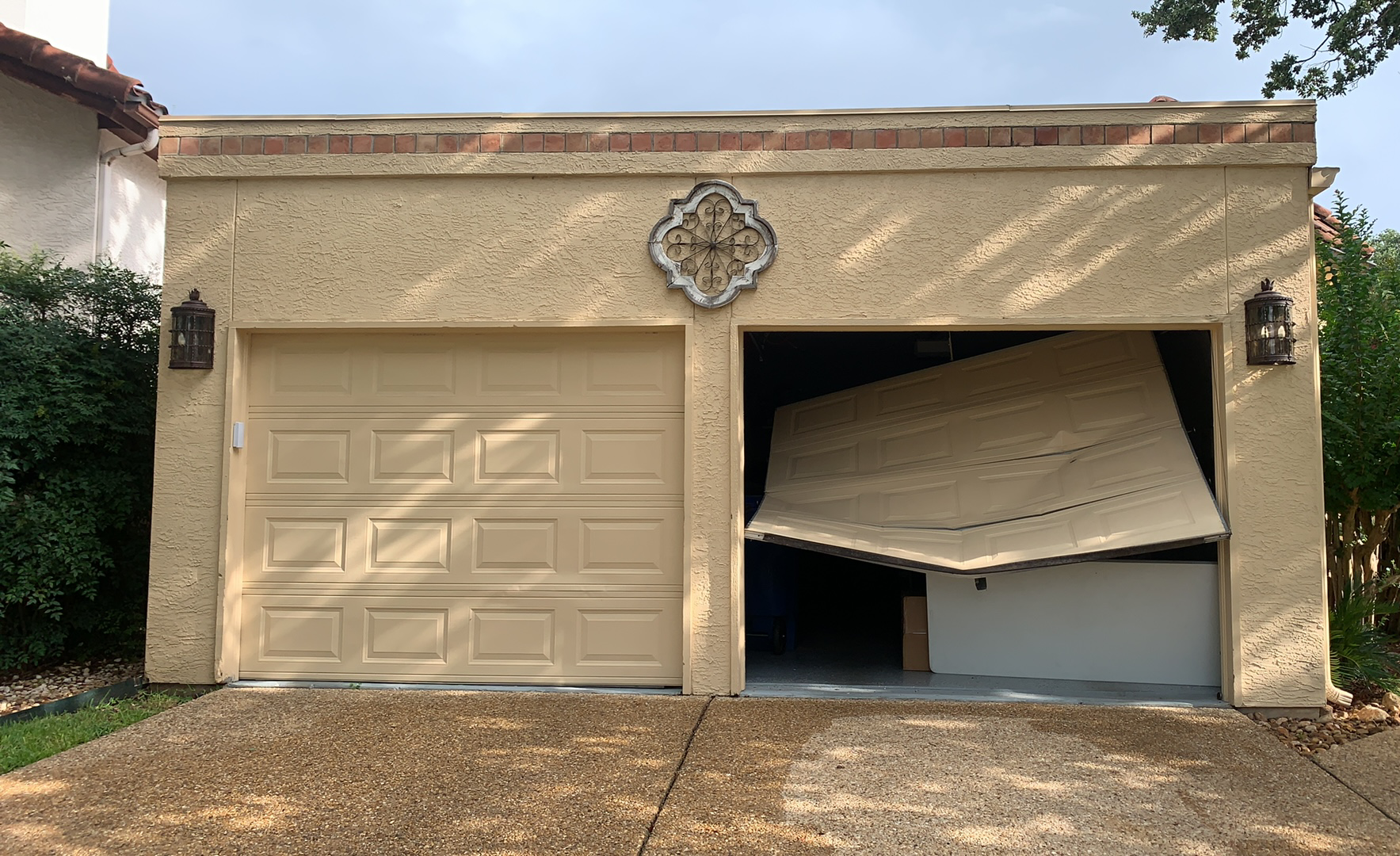
Important: A garage door opener is designed to move a properly balanced door, not lift its full weight. If the springs fail or the door becomes unbalanced, using the opener can strain the motor and cause damage.
Why Choosing the Right Garage Door Opener Matters
Your garage door is likely the largest moving object in your home and, for many families, one of the most frequently used entrances. Choosing the right garage door opener affects more than just convenience.
A properly matched opener can provide:
- Smooth and reliable daily operation
- Quieter performance, especially for attached garages
- Improved safety through modern sensor technology
- Better security with rolling-code encryption
- Convenient smartphone and smart home integration
- Longer equipment lifespan by matching the opener to your door’s weight
For example, installing an oversized opener on a lightweight garage door doesn’t necessarily improve performance, while choosing an underpowered model for a heavy insulated or solid wood door can shorten the opener’s lifespan.
How Do Garage Door Openers Work?
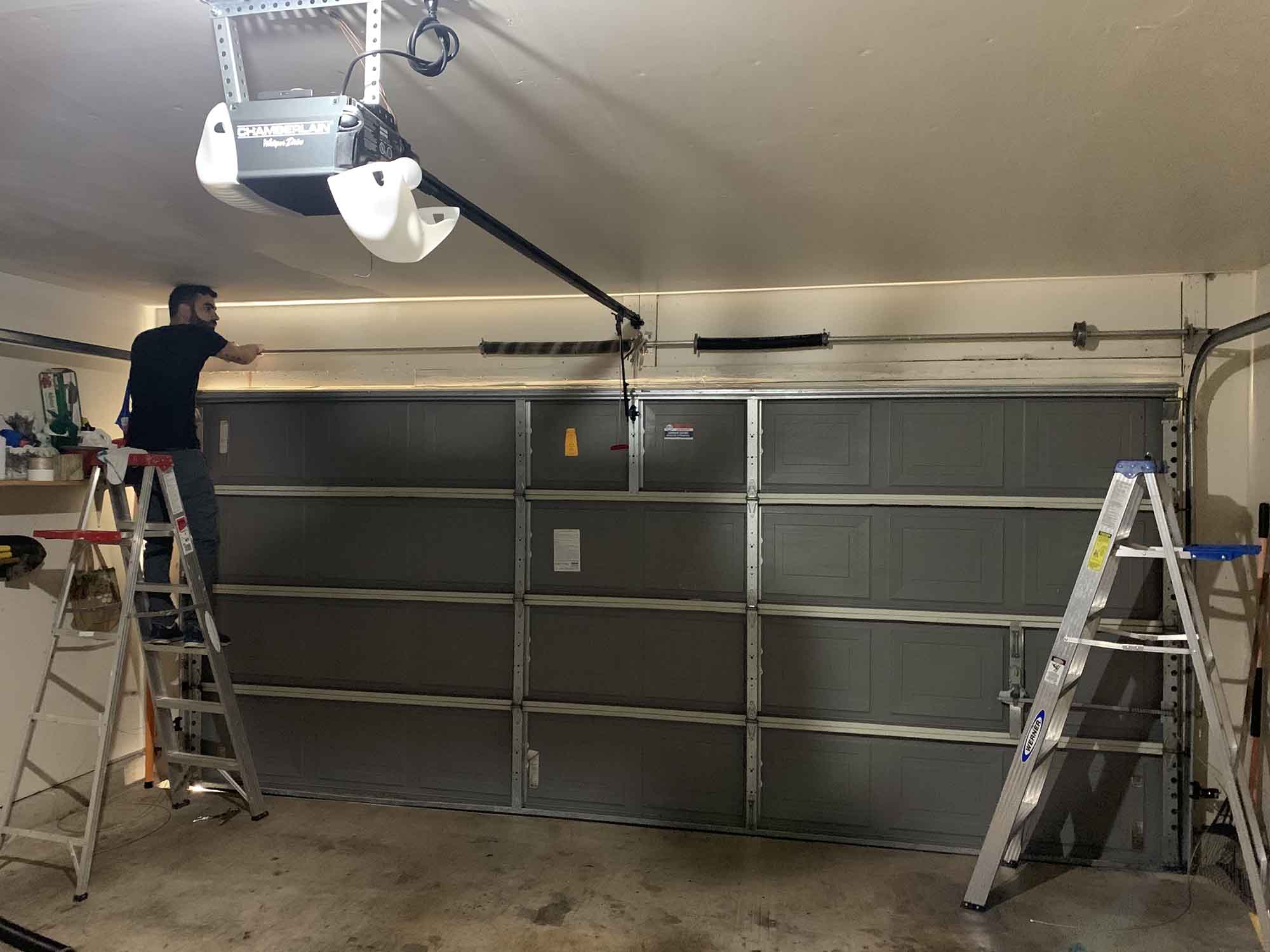
A garage door opener uses an electric motor to move a trolley along a rail, which opens or closes the garage door. Instead of lifting the full weight of the door, the opener works with the garage door’s spring system, which counterbalances most of the load and allows the motor to operate efficiently.
Although every opener uses slightly different technology, most follow the same basic operating process shown below.
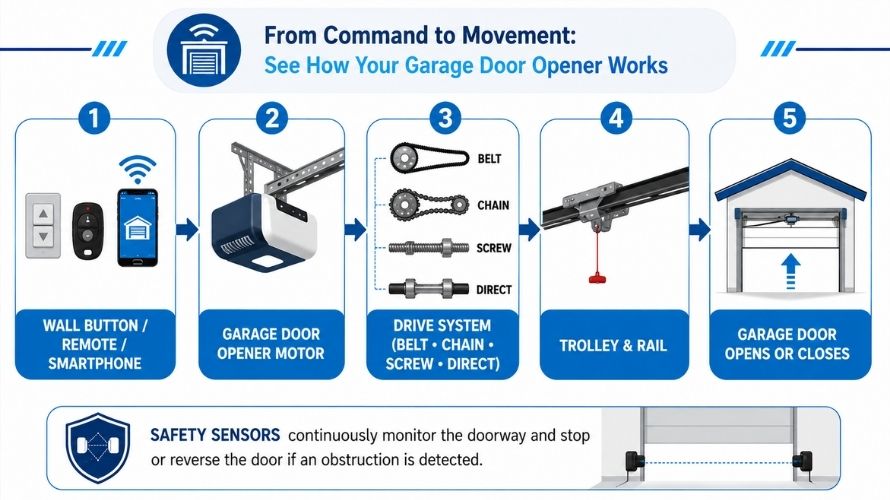
Pressing a remote may seem like a simple action, but several components begin working together almost instantly. The opener receives a command, activates the motor, transfers power through the drive system, and moves the trolley along the rail. At the same time, built-in safety sensors monitor the doorway and stop or reverse the door if an obstruction is detected.
Understanding this process also makes it easier to recognize when garage door opener repair may be necessary. A door that moves unevenly, reverses unexpectedly, or struggles to complete a cycle may indicate a problem with the opener, its components, or the garage door itself.
Main Parts of a Garage Door Opener
Every garage door opener contains several essential components that work together to provide smooth, safe, and reliable operation.
| Component | Purpose |
| Motor | Generates the power needed to operate the opener. |
| Drive System | Transfers power from the motor to move the garage door. This may be a belt, chain, screw, or direct drive system. |
| Rail | Guides the trolley as it travels during operation. |
| Trolley | Connects the opener to the garage door and moves it along the rail. |
| Logic Board | Processes signals from remotes, wall controls, safety sensors, and smart devices. |
| Safety Sensors | Detect objects or people beneath the door and prevent accidental closing. |
| Remote Control | Sends wireless commands to operate the opener. |
| Wall Control Panel | Allows manual operation from inside the garage and may include lighting or lock functions. |
| Emergency Release Cord | Disconnects the opener from the door so it can be operated manually during a power outage or equipment failure. |
Understanding the parts for a garage door opener can also help homeowners diagnose common issues, determine whether repairs are possible, and identify when replacing individual components or upgrading the entire system makes more sense.
Types of Garage Door Openers
The type of garage door opener you choose has a direct impact on noise, maintenance, durability, and overall performance. While every opener performs the same basic function, each drive system transfers power differently, making some better suited for certain homes than others.
If your garage is attached to your home or has a bedroom above it, reducing noise may be a priority. For detached garages, affordability or lifting power may matter more. Understanding these differences makes it easier to choose an opener that fits your needs instead of simply selecting the most popular model.
Belt Drive Garage Door Openers
A belt drive garage door opener uses a reinforced rubber belt instead of a metal chain to move the trolley. This design minimizes vibration, making it one of the quietest options available.
Because of its smooth operation, it’s a popular choice for homes with attached garages or living spaces above the garage.
Pros
- Very quiet operation
- Minimal vibration
- Low maintenance
- Smooth performance
- Ideal for residential homes
Considerations
- Slightly higher initial cost than chain drive models
Noise-sensitive homeowners often choose a quiet garage door opener because it reduces the sound transmitted through walls and ceilings without sacrificing reliability.
Chain Drive Garage Door Openers
Chain drive openers use a metal chain to move the trolley along the rail. They have been one of the most common garage door opener types for decades because of their durability and affordability.
They perform well on heavy garage doors but tend to produce more noise than other drive systems.
Pros
- Budget friendly
- Durable construction
- Suitable for heavy doors
- Proven long-term reliability
Considerations
- Louder operation
- Requires occasional adjustment and lubrication
Screw Drive Garage Door Openers
A screw drive opener moves the trolley using a threaded steel rod instead of a chain or belt. With fewer moving parts, these systems generally require less routine maintenance.
They can perform well in moderate climates, although temperature extremes may affect lubrication requirements over time.
Pros
- Fewer moving parts
- Lower maintenance requirements
- Consistent lifting performance
Considerations
- Moderate operating noise
- Performance can vary in extreme temperatures
Direct Drive Garage Door Openers
Unlike other systems, a direct drive garage door opener keeps the chain stationary while the motor itself travels along the rail. With fewer moving components, it delivers exceptionally quiet and smooth operation.
This design also reduces vibration, making it one of the best choices for homeowners who prioritize comfort.
Pros
- Quietest operation available
- Very low vibration
- Minimal maintenance
- Smooth performance
Considerations
- Higher purchase price
- Fewer manufacturers offer direct drive systems
Understanding the differences between drive systems is important when comparing performance, maintenance requirements, and long-term reliability. Choosing the right opener depends on your home’s layout, your garage door’s weight, and how important quiet operation is for your household.
Garage Door Opener Types Comparison
| Drive Type | Noise Level | Maintenance | Best For |
| Belt Drive | Very Quiet | Low | Attached garages and homes with bedrooms above the garage |
| Chain Drive | Loud | Moderate | Budget-conscious homeowners and detached garages |
| Screw Drive | Moderate | Low | Homeowners looking for fewer moving parts |
| Direct Drive | Quietest | Very Low | Homes where minimal vibration is a priority |
How to Choose the Right Garage Door Opener
Choosing the best garage door opener isn’t just about selecting the newest model. The right system depends on your garage door, how you use your garage, and the features that matter most to your household.
For example, a family with bedrooms above the garage will likely prioritize quiet operation, while someone with a detached garage may focus on durability and value.
Before choosing a garage door opener, think about how you use your garage every day.
Garage Door Size and Weight
Your opener should match the size and weight of your garage door. Lightweight single doors require less lifting power than insulated double doors or custom wood doors.
An opener that’s too small may wear out faster because it works harder during every cycle.
Noise Level
If your garage shares a wall with your home, noise can quickly become frustrating.
Modern belt drive and direct drive openers produce significantly less vibration than traditional chain drive systems, making them ideal for attached garages.
Horsepower
Motor power should match the demands of your garage door rather than simply choosing the largest available motor.
| Garage Door | Recommended Motor |
| Standard single door | ½ HP |
| Double or insulated door | ¾ HP |
| Oversized or solid wood door | 1 HP or higher |
Choosing the correct horsepower helps reduce strain on the motor and supports long-term reliability.
Smart Features
Many homeowners now look for convenience features that go beyond simply opening and closing the garage door.
Modern garage door openers may include:
- Wi-Fi connectivity
- Smartphone control
- Battery backup
- Rolling-code security
Voice assistant compatibility and remote monitoring have also become increasingly common, allowing homeowners to manage their garage door from almost anywhere.
Safety Features
Safety should never be overlooked when choosing a new opener.
Look for systems that include:
- Auto-reverse technology
- Photo-eye safety sensors
- Manual emergency release
- Motion-activated lighting
- Rolling-code security
These features help protect your family while improving overall security.
Best Garage Door Opener Features to Look For
While drive type is important, the features included with a garage door opener can have just as much impact on everyday convenience.
Some of the most useful features include:
- Battery backup during power outages
- Built-in Wi-Fi connectivity
- Smartphone monitoring and control
- Quiet DC motor operation
- Soft start and soft stop technology
- Motion-activated LED lighting
- Rolling-code security technology
- Wireless keypads and multiple remote controls
Rather than focusing only on price, consider which features will genuinely improve the way you use your garage every day.
Smart Garage Door Openers
Smart technology has changed the way homeowners interact with their garage doors. Instead of relying solely on a remote control, a smart garage door opener allows you to monitor and operate your garage door using a smartphone or compatible smart home system.
For instance, if you’re halfway to work and can’t remember whether you closed the garage door, you can simply check its status through your mobile app instead of driving back home. If you also want hands-free control, an Alexa garage door opener lets you check your garage door’s status and operate compatible systems using voice commands.
Depending on the manufacturer, smart garage door openers may offer:
- Real-time door status notifications
- Remote opening and closing
- Activity history
- Guest access
- Scheduled automation
- Integration with compatible smart home platforms
Many newer garage door openers include these features from the factory, while older systems can often be upgraded with a compatible smart controller.
As smart home technology continues to evolve, these features are becoming less of a luxury and more of an everyday convenience for many homeowners.
Garage Door Opener Installation
Installing a garage door opener involves more than attaching a motor to the ceiling. The opener must be correctly sized, securely mounted, properly connected to the garage door, and carefully adjusted to ensure safe, reliable operation.
While some homeowners choose to install an opener themselves, professional installation helps ensure the system operates as intended and that important safety features are correctly configured.
Installation typically includes:
- Mounting the opener and rail
- Connecting the drive system
- Installing the wall control
- Aligning the photo-eye safety sensors
- Programming remotes and keypads
- Setting travel limits and opening force
- Testing the auto-reverse safety system
A properly installed opener should move the door smoothly without placing unnecessary strain on the motor. If you’re replacing an older system or adding a new opener to your garage, professional garage door opener installation also helps verify that your garage door is balanced and compatible with the new equipment.
Garage Door Opener Maintenance
Routine maintenance helps extend the lifespan of your garage door opener while reducing the likelihood of unexpected breakdowns. Most maintenance tasks require only a few minutes but can prevent costly repairs later.
Garage Door Opener Maintenance Checklist
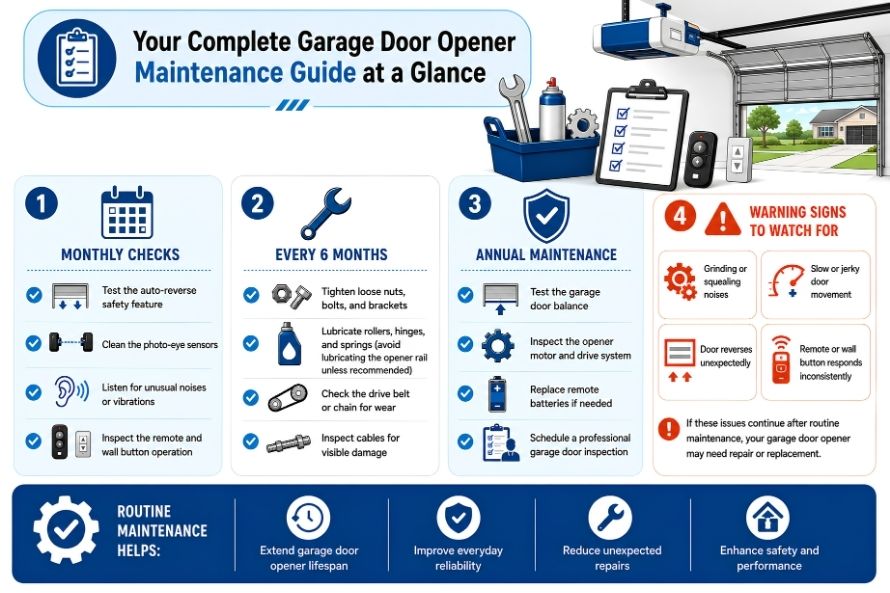
- Lubricate hinges, rollers, and bearings with a garage door lubricant.
- Test the photo-eye safety sensors monthly.
- Tighten loose brackets and mounting hardware.
- Replace remote batteries as needed.
- Inspect the drive system for excessive wear.
- Check the emergency release cord for proper operation.
- Test the garage door balance by disconnecting the opener and lifting the door manually.
One simple habit can make a big difference. Listen to your garage door each time it operates. If it suddenly becomes louder, starts vibrating more than usual, or begins moving unevenly, it’s often an early warning that something needs attention before a larger problem develops.
Signs Your Garage Door Opener Needs Repair
Your garage door opener usually gives warning signs before it stops working completely. Recognizing these early can help prevent unexpected breakdowns and reduce the risk of more expensive repairs.
Common signs include:
- The opener makes grinding, squealing, or rattling noises.
- The garage door opens slowly or stops midway.
- The remote or wall button works inconsistently.
- The door reverses unexpectedly.
- The motor runs, but the door doesn’t move.
- The opener vibrates excessively during operation.
- The safety sensors frequently malfunction despite being clean and aligned.
While some issues can be caused by worn opener components, others may result from broken springs, damaged rollers, or an unbalanced garage door. If these symptoms continue after basic troubleshooting, a professional inspection is recommended.
Common Garage Door Opener Problems
Even a well-maintained garage door opener can experience problems over time. Some issues are caused by worn components, while others stem from electrical, mechanical, or sensor-related faults.
The table below highlights some of the most common issues homeowners encounter.
| Problem | Possible Cause |
| Garage door won’t open | Power issue, broken spring, faulty opener |
| Garage door won’t close | Misaligned safety sensors or obstruction |
| Opener makes excessive noise | Worn drive components, loose hardware, lack of lubrication |
| Remote control not working | Dead batteries, programming issue, receiver fault |
| Door reverses unexpectedly | Dirty or misaligned photo-eye sensors |
| Slow operation | Aging motor, unbalanced door, worn components |
If your garage door opener begins behaving differently than usual, avoid assuming the opener itself is always the problem. For example, a broken spring, damaged rollers, or an unbalanced garage door can place extra strain on the opener and create symptoms that appear to be motor failure.
When problems become frequent, or repairs continue to add up, diagnosing garage door opener problems early can help determine whether a repair is sufficient or if replacement is the better long-term investment.
When Should You Replace a Garage Door Opener?
Most garage door openers provide reliable service for 10 to 15 years when properly maintained. As they age, however, components wear out, technology becomes outdated, and newer safety features become standard.
If your opener is showing multiple warning signs, replacing it may be more practical than continuing to repair it.
Signs You May Need a New Garage Door Opener
- The opener is more than 10 to 15 years old.
- It struggles to lift the garage door.
- Grinding, rattling, or excessive vibration has become common.
- Repairs are becoming more frequent.
- Replacement parts are difficult to find.
- The opener lacks modern safety or smart features.
- It is incompatible with today’s smart home technology.
Sometimes homeowners ask whether replacing only the motor is enough. While that may be possible for certain models, older systems often have multiple worn components, making a complete garage door opener replacement the more practical and cost-effective long-term solution.
Garage Door Opener Safety Features
Modern garage door openers include several built-in safety features designed to protect people, pets, vehicles, and property. These systems are now standard on most residential openers and should be tested regularly to ensure they continue working properly.
Key safety features include:
Photo-Eye Safety Sensors
Installed near the bottom of the garage door opening, these sensors detect objects crossing the doorway and automatically stop or reverse the closing door.
Auto-Reverse System
If the garage door encounters resistance while closing, the opener reverses direction to reduce the risk of injury or damage.
Emergency Release Cord
This red handle allows you to disconnect the garage door from the opener during a power outage or equipment failure so the door can be operated manually.
Rolling-Code Security
Every time you use the remote, the access code changes automatically. This helps prevent code theft and unauthorized entry.
Battery Backup
Some garage door openers include a backup battery that allows the opener to continue operating during a power outage.
Testing these safety features regularly is one of the simplest ways to help ensure your garage door system continues operating safely.
Conclusion
Choosing a garage door opener isn’t just about finding a motor that lifts your garage door. It’s about selecting a system that matches your home’s needs, your daily routine, and the features you’ll actually use. Whether you’re installing a new opener, replacing an aging unit, or maintaining your current system, understanding how garage door openers work can help you make informed decisions, improve reliability, and avoid unnecessary repairs.
Modern garage door openers offer quieter operation, enhanced safety features, and smart home connectivity that make everyday access more convenient. Taking the time to compare your options today can help you choose a system that delivers dependable performance and long-term value.
Looking for more garage door tips, maintenance advice, and service information? Visit Mojo Garage Doors.
FAQs
What is the best type of garage door opener?
The best garage door opener depends on your home’s needs. Belt drive openers are popular for their quiet operation, while chain drive models offer excellent durability and value. Direct drive openers provide the quietest performance, making them ideal for attached garages.
How long do garage door openers last?
Most garage door openers last 10 to 15 years with proper maintenance. Regular inspections, lubrication, and timely repairs can help extend their service life.
Can I install a garage door opener myself?
Some homeowners successfully install garage door openers themselves, but professional installation helps ensure the opener is properly mounted, adjusted, and tested, particularly the safety sensors and auto-reverse system.
What horsepower garage door opener do I need?
Most single garage doors work well with a ½ HP opener, while double or insulated doors often benefit from ¾ HP. Heavy custom wood doors may require 1 HP or higher.
Why is my garage door opener making loud noises?
Grinding, rattling, or squealing noises can indicate worn drive components, loose hardware, insufficient lubrication, or an unbalanced garage door. Identifying the source early can help prevent additional damage.
Can I control my garage door with my phone?
Yes. Many modern garage door openers include Wi-Fi connectivity that allows homeowners to monitor and operate their garage door using a smartphone app from virtually anywhere.
Are smart garage door openers worth it?
For many homeowners, yes. Smart garage door openers provide remote access, activity notifications, smartphone control, and integration with compatible smart home platforms, making everyday operation more convenient.
How often should a garage door opener be serviced?
A basic inspection and maintenance check at least once a year is recommended. Homeowners should also test the safety sensors and auto-reverse system monthly.