Garage door springs do most of the heavy lifting every time your garage door opens or closes. While they are designed to withstand thousands of cycles, they do not last forever. As springs wear out, homeowners may notice a heavier door, unusual noises, slower operation, or increased strain on the opener.
Understanding how long garage door springs last can help you recognize early warning signs, plan for replacement, and avoid unexpected breakdowns. In this guide, we’ll explain average spring lifespan, the factors that affect longevity, common signs of wear, and practical ways to extend the life of your spring system.
Quick Answer
Most garage door springs last between 7 and 15 years, depending on the spring type, usage frequency, maintenance, and environmental conditions. Standard torsion springs typically last 15,000 to 20,000 cycles, while many extension springs are rated for around 10,000 cycles. Homeowners who perform regular maintenance and address wear early often get the longest lifespan from their spring system.
What Is the Average Garage Door Spring Lifespan?
Most garage door springs are measured by cycles rather than years.
A cycle equals one complete opening and closing of the garage door.
Standard garage door spring lifespan typically falls into these ranges:
| Spring Type | Average Cycle Rating | Typical Lifespan |
| Torsion Springs | 15,000–20,000 cycles | 10–15 years |
| Extension Springs | Around 10,000 cycles | 7–12 years |
| High-Cycle Torsion Springs | 25,000–50,000+ cycles | 15–20+ years |
The actual lifespan depends heavily on how often the garage door is used.
For example:
- 2 cycles per day = longer lifespan
- 6–8 cycles per day = average lifespan
- 10+ cycles per day = faster wear
A household that uses the garage door as the primary entrance may wear out springs much faster than a family that uses the front door most of the time.
What Are Garage Door Spring Cycles?
Garage door spring cycles are the industry’s standard measurement for spring longevity.
Each time the garage door opens and closes, one cycle is completed.
For example:
- Leave for work = 1 cycle
- Return home = 1 cycle
- Total = 2 cycles
If multiple family members use the garage throughout the day, the total number of cycles can increase quickly.
A spring rated for 10,000 cycles may sound like a lot, but frequent use can shorten its lifespan significantly.
Understanding cycle ratings helps homeowners estimate when garage door spring replacement may eventually become necessary.
Which Garage Door Springs Last Longer?
When comparing garage door spring lifespan, torsion springs generally last longer than extension springs.
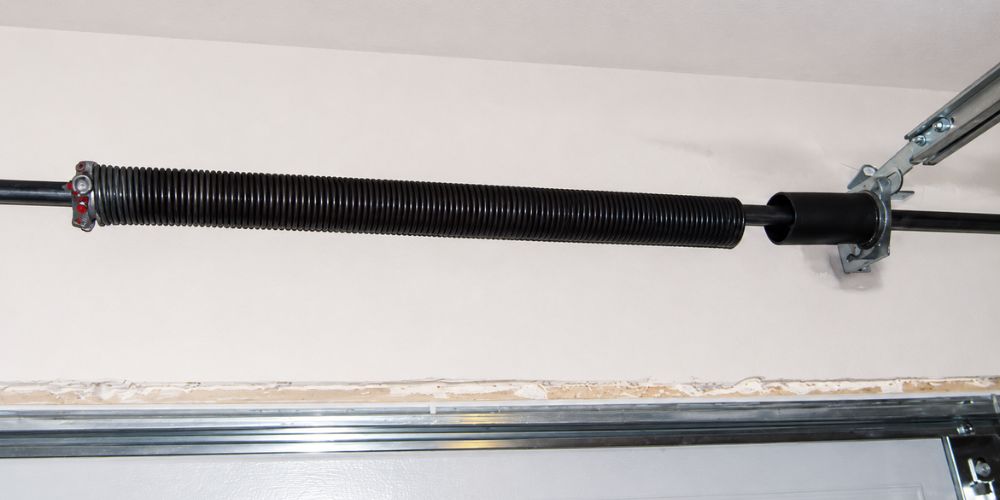
Torsion springs operate by twisting along a metal shaft mounted above the garage door. This design provides smoother movement, better balance, and more even distribution of force.
Extension springs stretch and contract along the horizontal tracks during operation. While effective, they typically experience more wear over time due to their design.
Torsion springs often provide:
- Longer lifespan
- Better door balance
- Quieter operation
- Reduced stress on the opener
- Lower long-term maintenance requirements
Because of these advantages, many homeowners choose torsion systems when replacing older extension springs. However, spring type is only one part of the equation. Understanding how garage door springs function as a complete system can help homeowners make better maintenance and replacement decisions.
Factors That Affect Garage Door Spring Lifespan
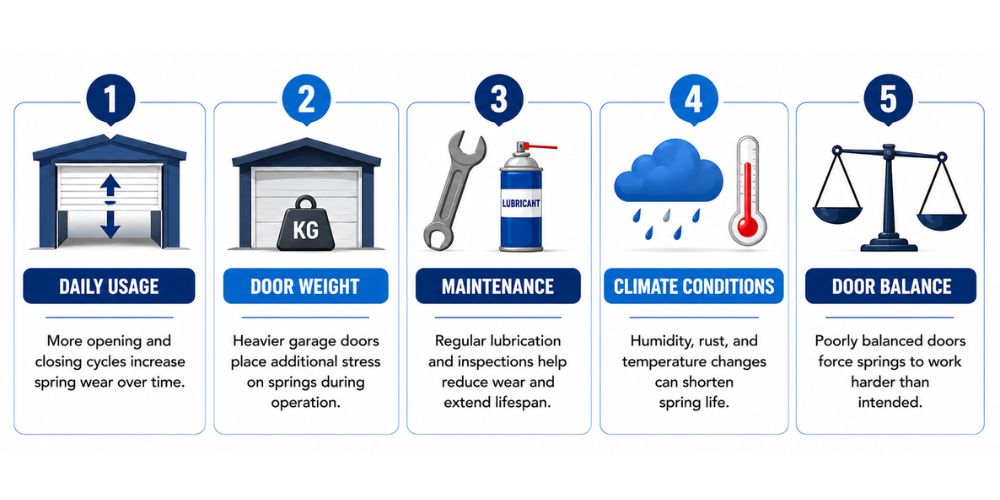
Several factors influence how long garage door springs last.
Daily Usage
- The more frequently the garage door operates, the faster the springs wear out.
- Families who use the garage as their primary entrance often put significantly more cycles on the springs each year.
Door Weight
- Heavy garage doors place additional stress on the spring system.
- Insulated steel doors, oversized doors, and custom wood doors often require springs to work harder than lightweight doors.
Maintenance
- Regular lubrication and inspections help reduce friction and wear.
- Proper maintenance can significantly extend the life of garage door springs.
Climate Conditions
- Humidity, moisture, and temperature fluctuations can affect spring performance over time.
- Rust and corrosion weaken metal components and can shorten spring lifespan.
Improper Balance
- When a garage door is not properly balanced, springs may experience uneven stress.
- This can accelerate wear and increase the likelihood of premature failure.
Signs Your Garage Door Springs Are Wearing Out
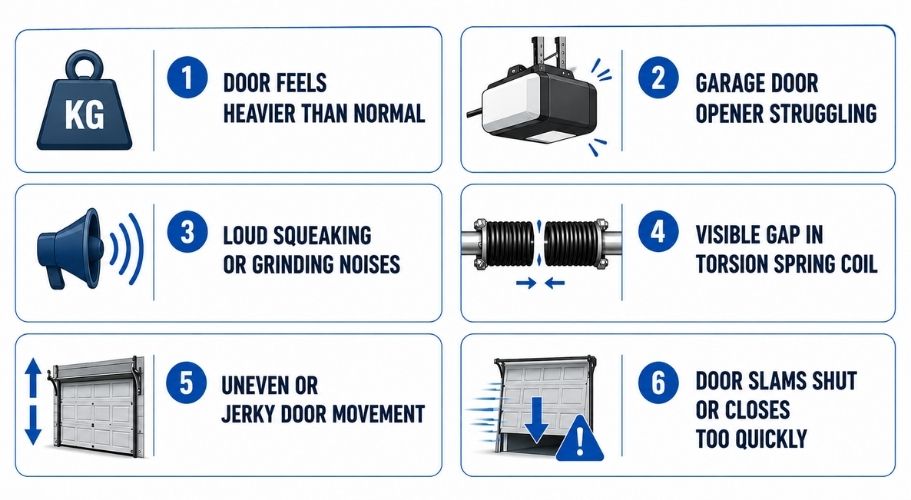
Garage door springs rarely fail without warning.
In many cases, homeowners notice subtle performance issues before a spring breaks completely.
Common warning signs include:
- The Garage Door Feels Heavy
- A properly functioning spring system counterbalances the weight of the door.
- If the door suddenly feels heavier during manual operation, the springs may be weakening.
- Slow or Uneven Movement
- Worn springs often cause the door to move unevenly or more slowly than normal.
- The door may hesitate during operation or appear unbalanced.
- Visible Gaps in Torsion Springs
- A broken torsion spring often develops a visible separation in the coil.
- This gap is one of the clearest signs that replacement is needed.
- Excessive Noise
- Squeaking, grinding, popping, or creaking sounds may indicate spring wear.
- While lubrication can help in some cases, persistent noise may signal a larger issue.
- The Opener Is Struggling
- Many homeowners first suspect an opener problem when the real issue is a weakening spring.
- As springs lose tension, the opener must work harder to move the door.
- The Door Slams Shut
- If the door closes faster than usual or feels difficult to control, the spring system may no longer be providing adequate support.
- This can become a significant safety concern.
Can Garage Door Maintenance Extend Spring Life?
Yes.
Routine garage door maintenance is one of the most effective ways to maximize spring lifespan.
Recommended maintenance tasks include:
- Lubricating springs regularly
- Inspecting for rust or corrosion
- Checking door balance
- Tightening loose hardware
- Monitoring unusual noises
- Scheduling annual professional inspections
Regular maintenance helps identify minor issues before they develop into major repairs. A consistent garage door maintenance routine can also reduce wear on springs, rollers, cables, and other moving components throughout the system.
Homeowners who maintain their systems consistently often experience fewer unexpected spring failures.
Does Weather Affect Garage Door Springs?
Weather can play a significant role in spring longevity.
- Humidity and Moisture
- Moisture can lead to rust and corrosion.
- Over time, corrosion weakens the metal and increases the risk of spring failure.
- Temperature Changes
- Repeated expansion and contraction caused by changing temperatures can contribute to material fatigue.
- Coastal and Humid Environments
- Homes in humid climates often experience accelerated corrosion compared to homes in drier regions.
- Routine lubrication becomes especially important in these environments.
How Long Do Torsion Springs Last Compared to Extension Springs?
Torsion springs generally provide a longer service life.
| Feature | Torsion Springs | Extension Springs |
| Average Cycles | 15,000–20,000 | Around 10,000 |
| Lifespan | 10–15 Years | 7–12 Years |
| Maintenance | Lower | Higher |
| Door Balance | Better | Moderate |
| Opener Strain | Less | More |
For homeowners focused on long-term durability, torsion springs are often the preferred option.
What Happens When Garage Door Springs Reach the End of Their Lifespan?
As springs approach the end of their cycle rating, performance typically declines.
You may notice:
- Increased noise
- Slower operation
- Reduced balance
- Opener strain
- Difficulty lifting the door
- Visible wear
Eventually, the spring may break completely. Recognizing the warning signs of a broken garage door spring early can help homeowners avoid sudden breakdowns and potential safety hazards.
When this happens, the garage door can become extremely heavy and unsafe to operate.
Because garage door springs are under significant tension, replacement should be handled by trained professionals.
When Should Garage Door Springs Be Replaced?
Garage door springs do not always fail suddenly. In many cases, they show warning signs as they wear down over time. Understanding when garage door spring replacement becomes necessary can help homeowners avoid unexpected breakdowns, opener strain, and additional repair costs.
Garage door springs should generally be replaced when:
- They reach the end of their life cycle
- Visible wear appears
- A spring breaks
- Door balance becomes poor
- The opener begins struggling
- Repeated adjustments are required
Many technicians recommend replacing both springs together on two-spring systems, even if only one has failed.
Because both springs typically experience similar wear, replacing both helps maintain proper balance and performance.
Are High-Cycle Springs Worth It?
For many homeowners, high-cycle springs can be a worthwhile investment.
Benefits include:
- Longer lifespan
- Fewer replacements
- Improved reliability
- Better value over time
- Reduced maintenance interruptions
High-cycle springs are especially beneficial for households that use their garage doors frequently throughout the day.
Although they cost more upfront, they often reduce long-term replacement costs.
Conclusion
Garage door springs are responsible for safely lifting and balancing one of the heaviest moving objects in your home. While most springs last between 7 and 15 years, their actual lifespan depends on factors such as spring type, cycle rating, daily usage, maintenance, and environmental conditions.
Torsion springs generally last longer than extension springs and provide smoother operation, better balance, and reduced strain on the opener. Regardless of spring type, recognizing early warning signs and performing routine maintenance can help extend spring life and prevent unexpected failures.
If your garage door feels heavier than usual, moves unevenly, or shows signs of spring wear, a professional inspection can help identify problems before they lead to more expensive repairs.
FAQs
How long do garage door springs last?
Most garage door springs last between 7 and 15 years. Torsion springs typically last longer than extension springs because they are designed for higher cycle ratings.
How do I know if my garage door springs are worn out?
Common signs include a heavy garage door, uneven movement, loud noises, visible gaps in torsion springs, and an opener that struggles during operation.
Do torsion springs last longer than extension springs?
Yes. Torsion springs generally last longer because they distribute force more evenly and experience less wear during operation.
Can garage door maintenance extend spring life?
Regular lubrication, inspections, and balance checks can help reduce wear and maximize spring lifespan.
How often should garage door springs be replaced?
Replacement timing depends on usage and spring condition. Many homeowners replace springs after 10 to 15 years or when significant wear becomes visible.
Are garage door springs dangerous?
Yes. Garage door springs are under high tension and can cause serious injury if handled improperly. Spring replacement should be performed by trained professionals.
Should both garage door springs be replaced at the same time?
In most cases, yes. Replacing both springs helps maintain proper balance and prevents a second failure shortly after the first replacement.