Garage door springs are responsible for lifting and balancing the weight of your garage door every time it opens and closes. While many homeowners focus on the opener when problems occur, the spring system often plays a much bigger role in overall performance.
If you’re researching torsion vs extension garage door springs, you’re likely trying to understand which system is better, which lasts longer, and whether upgrading is worth the investment. The answer depends on your garage door, budget, and long-term goals.
Both spring systems are designed to counterbalance the weight of the door, but they work differently and offer different levels of safety, durability, and maintenance requirements.
In this guide, we’ll compare torsion springs and extension springs, explain their advantages and disadvantages, and help you determine which option is best for your home.
Quick Answer: Torsion vs Extension Garage Door Springs
Torsion springs generally last longer, operate more smoothly, and provide better safety than extension springs. Extension springs typically cost less upfront but require more maintenance and have a shorter lifespan. For most modern homes, torsion springs are considered the preferred option due to their durability, balance, and overall performance.
What Are Torsion Springs?
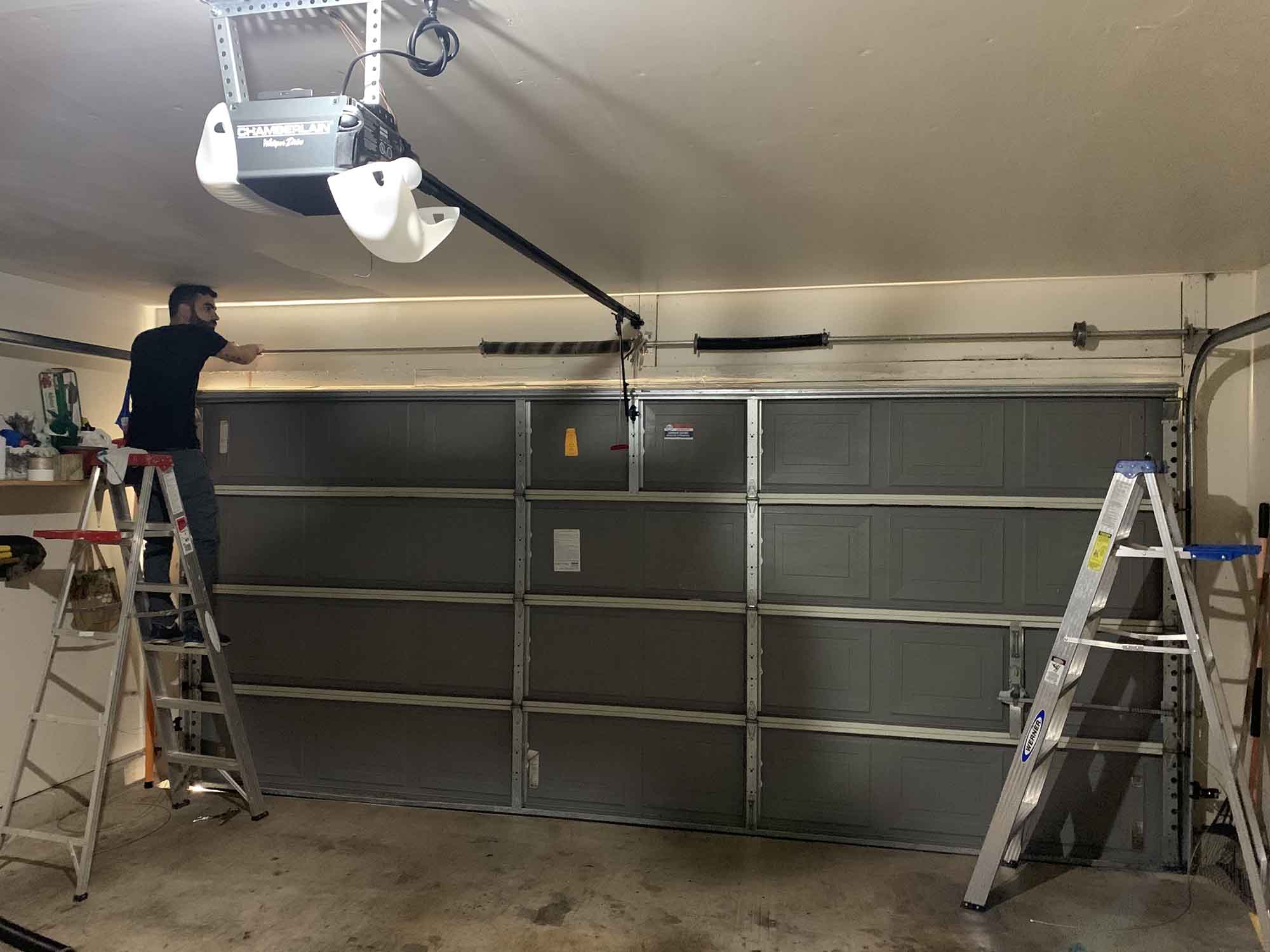
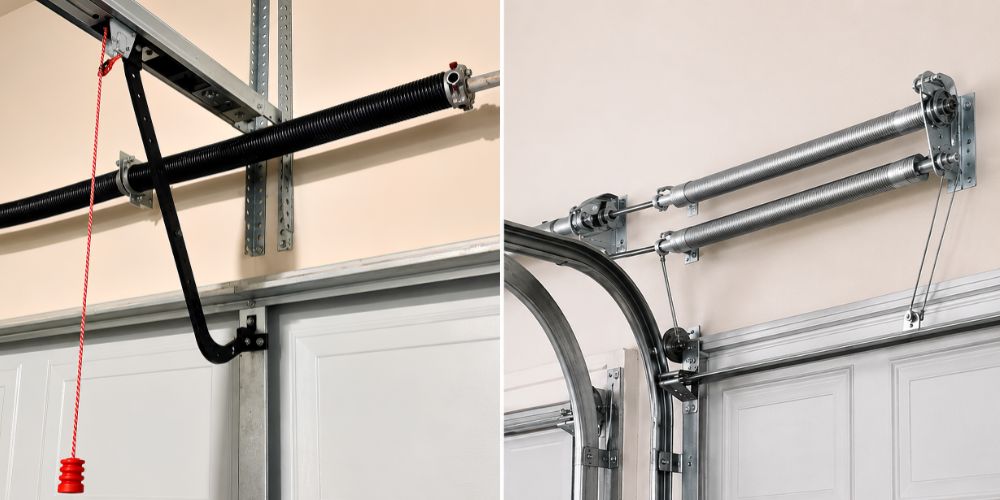
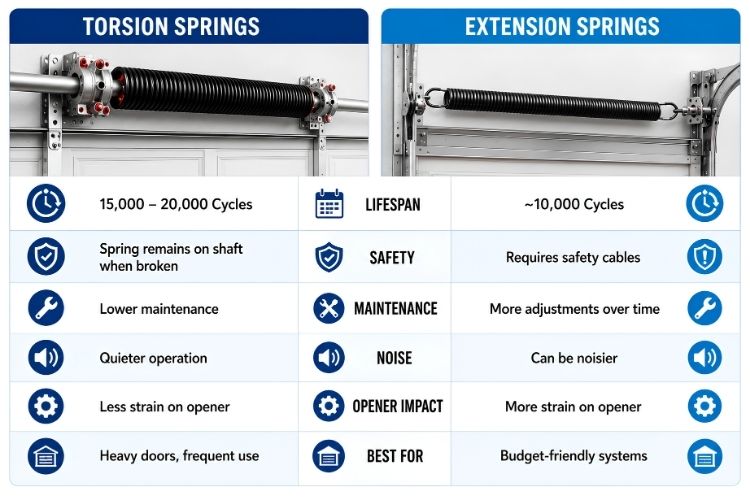
Torsion springs are mounted horizontally above the garage door opening on a metal shaft. As the door moves, the springs twist and store energy that helps lift and lower the door smoothly.
Most modern residential garage doors use torsion spring systems because they provide consistent balance and place less strain on other components.
A torsion spring garage door system distributes weight evenly across the door, which helps reduce wear on tracks, rollers, and garage door openers.
Benefits of Torsion Springs
Torsion springs offer several advantages that make them the preferred choice for many homeowners:
- Longer lifespan than extension springs
- Smoother and quieter operation
- Better door balance
- Improved safety
- Less maintenance over time
- Reduced strain on the garage door opener
Because the weight is distributed more evenly, torsion systems often help extend the life of the opener and other moving parts.
Common Drawbacks of Torsion Springs
Despite their advantages, torsion springs are not perfect.
Some potential drawbacks include:
- Higher upfront installation cost
- More complex installation
- Professional replacement is usually required
However, many homeowners find the longer lifespan offsets the higher initial investment.
What Are Extension Springs?
Extension springs are mounted along the horizontal tracks on each side of the garage door. Instead of twisting, they stretch and contract as the door opens and closes.
Extension spring garage door systems are commonly found on older garage doors and some budget-friendly installations.
These springs work by expanding when the door closes and contracting when the door opens.
Benefits of Extension Springs
Extension springs remain a practical option for certain situations because they offer:
- Lower initial cost
- Simpler design
- Effective operation for lighter garage doors
- Compatibility with many older systems
For homeowners focused primarily on budget, extension springs can be an attractive option.
Common Drawbacks of Extension Springs
Compared to torsion systems, extension springs typically require more attention and maintenance.
Common disadvantages include:
- Shorter lifespan
- Increased noise during operation
- Less balanced movement
- Greater wear on components
- Higher risk during spring break
Modern extension spring systems should always include safety cables to help contain the spring if it snaps unexpectedly.
Torsion vs Extension Springs: Key Differences
Understanding the difference between torsion and extension springs becomes easier when comparing the features side by side.
| Feature | Torsion Springs | Extension Springs |
| Lifespan | 15,000–20,000 cycles | Around 10,000 cycles |
| Safety | Generally safer | Higher risk when broken |
| Noise Level | Quieter operation | Typically noisier |
| Maintenance | Less maintenance | More frequent maintenance |
| Balance | Better weight distribution | Less consistent balance |
| Opener Impact | Less strain on the opener | Can increase opener wear |
| Cost | Higher upfront cost | Lower upfront cost |
| Performance | Smoother operation | More basic operation |
While both systems can operate effectively, torsion springs typically deliver better long-term performance and reliability. Homeowners who are evaluating spring upgrades or planning future repairs may also benefit from learning more about garage door springs, including how they work, what affects their lifespan, and the most common problems that lead to replacement.
Are Torsion Springs Better Than Extension Springs?
For most homeowners, torsion springs are generally considered the better option.
They provide smoother operation, improved safety, longer lifespan, and better support for the garage door opener. These benefits often outweigh the higher upfront cost.
A garage door torsion spring vs extension spring comparison usually favors torsion systems because they offer more consistent performance over time.
That said, extension springs still have their place.
Extension springs may be a suitable choice if:
- You have a lighter garage door
- Budget is your primary concern
- Your current system already uses extension springs
- A complete system upgrade is not practical
The best choice ultimately depends on your specific garage door setup and long-term expectations.
Which Garage Door Spring Lasts Longer?
When comparing garage door spring lifespan, torsion springs have a clear advantage.
Most standard torsion springs are rated for approximately 15,000 to 20,000 cycles, while many extension springs are rated for around 10,000 cycles.
One cycle equals one complete opening and closing of the garage door.
For a family that uses the garage several times each day, those cycles can add up quickly.
Several factors influence spring lifespan:
- Daily Usage
The more frequently the garage door operates, the faster the springs wear out.
- Door Weight
Heavy insulated doors place greater stress on springs than lightweight doors.
- Maintenance
Regular lubrication and inspections help reduce wear and extend spring life.
- Climate Conditions
Humidity, temperature changes, and corrosion can shorten spring lifespan over time.
Homeowners looking for maximum longevity often choose torsion systems because they typically last longer under normal operating conditions. However, understanding when garage door springs should be replaced can help prevent unexpected failures and costly repairs.
Which Spring Type Is Safer?
Safety is one of the biggest reasons professionals often recommend torsion springs.
When a torsion spring breaks, the spring usually remains attached to the shaft above the door. This helps contain movement and reduces the risk of flying debris.
Extension springs operate differently.
When an extension spring snaps, it can potentially become a dangerous projectile if proper safety cables are not installed. Understanding what happens when a garage door spring breaks can help homeowners recognize potential safety risks before they become serious.
Modern extension spring systems should always include containment cables to improve safety.
While both systems can operate safely when properly maintained, torsion springs are generally viewed as the safer option due to their design.
Can You Convert Extension Springs to Torsion Springs?
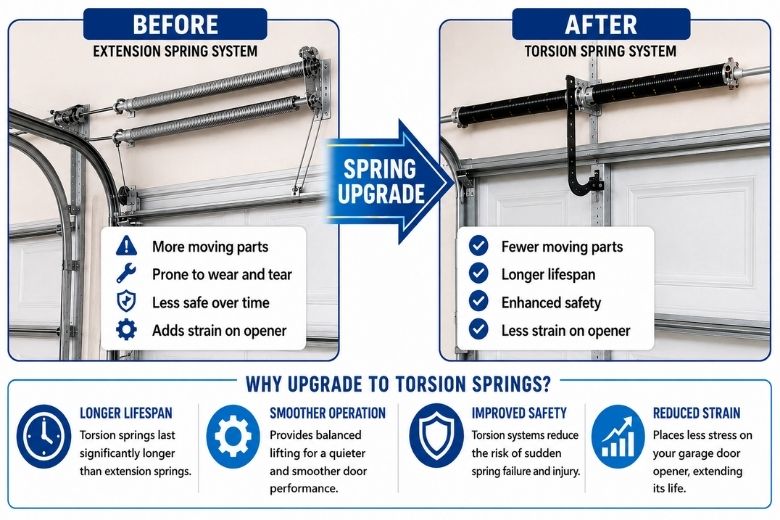
Yes, it is possible to convert extension springs to torsion springs in many garage door systems.
A garage door spring conversion is often recommended when homeowners want:
- Longer spring lifespan
- Improved door balance
- Quieter operation
- Reduced maintenance
- Better opener performance
Many homeowners consider a garage door spring upgrade when their extension springs wear out or when repeated maintenance becomes frustrating.
A conversion typically requires new hardware, a torsion shaft, spring components, and professional installation.
While the upfront cost is higher than simply replacing extension springs, many homeowners view the upgrade as a worthwhile long-term investment. In some cases, homeowners choose a conversion when planning a larger garage door spring replacement project.
How Spring Type Affects Garage Door Opener Performance
Many homeowners assume the garage door opener does all the lifting.
In reality, the spring system performs most of the heavy work. The opener primarily controls movement while the springs counterbalance the weight of the door. This is why garage door openers and springs work together as a complete system.
When springs become weak or worn, the opener must work harder to move the door.
This additional strain can lead to:
- Slow operation
- Increased motor wear
- Excessive vibration
- Premature component failure
- Reduced opener lifespan
In many garage door spring replacement projects, homeowners initially believe their opener is failing. After a closer inspection, the real issue is often worn or unbalanced springs forcing the opener to work harder than intended.
Because torsion systems generally provide smoother and more consistent balance, they often place less stress on the opener than extension systems.
A broken torsion spring or failing extension spring can quickly create garage door opener problems if not addressed promptly. In many cases, homeowners notice opener issues first even though the spring system is the real cause. Learning about common garage door opener troubleshooting issues can help identify the source of the problem sooner.
Which Garage Door Spring Is Best for Your Home?
The right spring system depends on your priorities, budget, and garage door usage.
Choose Torsion Springs If:
- You use your garage door multiple times daily
- You have a heavier garage door
- You want longer-lasting performance
- You prefer lower maintenance requirements
- You plan to stay in your home long-term
Choose Extension Springs If:
- Your budget is limited
- Your garage door is relatively lightweight
- Your current setup already uses extension springs
- You need a lower-cost replacement option
For many homeowners, torsion springs offer the best combination of durability, safety, and long-term value.
Conclusion
When comparing torsion vs extension garage door springs, both systems help lift and balance your garage door, but they offer different benefits. Torsion springs generally provide a longer lifespan, smoother operation, improved safety, and less strain on the opener. Extension springs can be a more affordable option for lighter doors and budget-conscious homeowners.
The best choice depends on your garage door, usage habits, and long-term goals. If you’re unsure which system is right for your home, a professional inspection can help. Keeping up with routine garage door maintenance can also extend spring life and reduce the risk of unexpected breakdowns.
FAQs
What is the difference between torsion and extension springs?
Torsion springs twist to generate a lifting force and are mounted above the garage door. Extension springs stretch and contract along the side tracks. Torsion systems generally provide better balance, longer lifespan, and smoother operation.
Are torsion springs worth the extra cost?
For many homeowners, yes. Torsion springs typically last longer, require less maintenance, and help reduce wear on the garage door opener, making them a worthwhile long-term investment.
Can a broken torsion spring damage a garage door opener?
Yes. When a torsion spring breaks, the opener must compensate for the missing lifting support. Continued operation can strain the motor and other opener components.
How long do torsion springs last?
Most standard torsion springs last between 15,000 and 20,000 cycles, depending on usage, maintenance, and environmental conditions.
Can I switch from extension springs to torsion springs?
In many cases, yes. Converting extension springs to torsion springs is a common upgrade that can improve performance, lifespan, and safety.
Which spring system requires less maintenance?
Torsion springs generally require less maintenance than extension springs because they operate more smoothly and experience less movement-related wear.
Are extension springs still used today?
Yes. Extension springs are still used on some residential garage doors, particularly older systems and budget-focused installations.
What type of spring is best for a heavy garage door?
Torsion springs are generally the preferred option for heavier garage doors because they provide better balance, smoother operation, and greater lifting support.