Your garage door is one of the largest moving systems in your home, and it needs to operate smoothly every day for convenience and safety. One often-missed part of garage door maintenance is the lubrication of moving parts. When lubrication is skipped, metal surfaces can rub together, increasing friction and accelerating wear on key parts like rollers, hinges, bearings, and springs.
Knowing the early signs that your garage door needs lubrication helps homeowners act before noise, rough door travel, or added strain leads to repair needs. A professional garage door lubrication service uses a garage-door-rated lubricant and applies it only where appropriate, helping the system run quieter and more consistently.
Understanding the Importance of Garage Door Lubrication
Proper lubrication does far more than quiet a noisy garage door. It plays a critical role in any routine maintenance by helping moving parts operate smoothly and reducing unnecessary friction. Parts such as rollers, hinges, bearings, and springs rely on lubrication to move consistently under tension. Without it, metal surfaces can grind against each other, increasing wear and raising the risk of repair needs.
Regular lubrication also supports long-term system performance. When friction is reduced, garage door parts experience less strain during daily operation, which helps maintain steady door travel and reliable opener performance. This preventive step allows technicians to protect high-use areas before wear affects safety or function.
Keeping garage door parts properly lubricated is one of the simplest garage door maintenance tips to support system longevity. When lubrication is handled at the right intervals and applied correctly, it helps the door operate more smoothly, limits early wear, and keeps the entire system working safely over time.
For a complete routine that pairs lubrication with other key upkeep steps, read How Often Should Homeowners Do Garage Door Maintenance?
Why Lubrication Is Essential for Garage Door Maintenance
Lubrication is a key part of garage door maintenance because it reduces friction between moving parts. When hinges, rollers, bearings, and springs don’t have enough lubrication, surfaces can rub together and wear faster. As friction increases, door travel may become rough or noisy, and the garage door opener may have to work harder than it should. Over time, that added strain can contribute to early wear in opener parts and increase the likelihood of repair needs.
Proper lubrication also supports safe operation. When parts start to bind, grind, or move unevenly, it can affect how the door responds during closing, including how smoothly safety features operate. Regular inspection and checking, paired with consistent lubrication at the right points, help the system move the way it should and reduce the chance of unexpected issues.
Lubrication should be included in any preventive garage door maintenance schedule. When it’s skipped, small symptoms, like squeaks or vibration, can develop into larger problems that require more extensive repair later.
How Lubrication Supports a Garage Door Tune-Up
During a professional garage door tune-up, lubrication is one of the most valuable steps for improving performance and reducing wear. Technicians don’t apply lubricant immediately. They start by cleaning key garage door parts to remove dust and buildup so the lubrication can adhere properly and perform as intended. This process supports smoother movement at hinges, bearings, springs, and rollers (when appropriate), while tracks are typically cleaned and inspected rather than coated on the running path.
Lubrication also helps the technician evaluate system condition more accurately. When the door runs quietly, and door travel is smoother, it becomes easier to detect minor issues such as loose hardware, early roller wear, shifting track alignment, or opener setting concerns. Addressing these small issues during a tune-up can reduce the chance of larger repair needs later.
Many homeowners schedule a tune-up when the door becomes louder than normal or begins moving unevenly. Those changes often signal increased friction and wear. A professional tune-up that includes proper lubrication, inspection, and checking helps restore steadier operation and gives you more confidence that the system is running safely and reliably.
If you’re unsure when to book service based on seasonal changes or early warning signs, read When Should Homeowners Schedule a Garage Door Tune-Up?
Common Signs Your Garage Door Needs Lubrication
Most garage doors provide clear warning signs when lubrication is wearing down. Recognizing these symptoms is an important part of garage door maintenance because it helps homeowners address minor concerns before they develop into larger repair needs. To ensure longevity and proper functionality, regular maintenance is essential. The most common clues show up in what you hear and how the door moves during normal operation.
When moving parts start to run dry, friction increases, leading to potential issues. That friction can cause unusual noises, rough door travel, or a door that feels less smooth than normal. If you notice these early signs, scheduling a professional inspection and lubrication can help reduce strain on garage door parts and support quieter, more consistent operation.
Unusual Noises and Squeaks
Unusual noise is one of the clearest signs your garage door may need lubrication. A properly operating door should sound steady and relatively quiet. If you start hearing new squeaks, grinding, or louder movement during opening and closing, friction is often the cause. When lubrication breaks down, metal surfaces can rub together and wear faster, which can lead to earlier repair needs.
Different sounds can point to different areas of concern. During door travel, listen for:
- Squeaking: Often linked to dry hinges, bearings, or rollers (depending on roller type)
- Grinding: May indicate buildup on rollers or in the track area, or friction from worn parts that need inspection and lubrication
- Popping or banging: Can be related to spring movement and should be inspected by a technician due to high tension.
If these sounds continue or worsen, schedule a professional inspection and lubrication. Ignoring persistent noise can allow wear to accelerate across key garage door parts.
For hardware noise reduction, The Spruce highlights silicone spray and lithium grease as effective, long-lasting lubricants for squeaks on metal hinge-style moving points.
Jerky Movements and Stiff Operation
Your garage door’s movement can reveal a lot about lubrication and overall system condition. If the door struggles going up or down, moves in choppy bursts, or feels stiff during door travel, friction may be increasing at key moving points. When lubrication breaks down, rollers, hinges, and bearings may not move as smoothly, which can make the door feel like it’s dragging rather than gliding.
Excess friction can also make the automatic opener work harder than normal. Over time, that added strain can lead to uneven operation and increase the chance of repair needs. Regular garage door maintenance that includes proper inspection and lubrication helps reduce resistance and supports smoother, steadier movement.
Watch the rollers and roller brackets as the door opens and closes. If you see sticking, sudden popping movement, or hesitation along the tracks, schedule a garage door professional inspection and lubrication. A technician will choose a garage-door-rated lubricant and apply it at approved points to restore smoother operation and protect key garage door parts.
Which Garage Door Parts Require Lubrication
A garage door system relies on multiple moving parts that work together to lift and lower the door safely under tension. Because these parts move during every cycle, certain high-friction points need consistent lubrication to support smooth door travel and reduce wear. Including lubrication in your garage door maintenance routine helps key parts operate more quietly and can reduce the chance of repair needs caused by excessive friction.
Technicians commonly apply garage-door-rated lubricant to specific areas such as rollers (when appropriate for the roller type), hinges, bearings, and spring systems. If you have a chain-drive opener, the drive parts may also require lubrication based on the manufacturer’s guidance. Understanding which garage door parts need lubrication helps homeowners recognize what should be serviced during a tune-up and what should be inspected when noise or stiffness begins to appear.
Tracks, Rollers, and Hinges
Garage door tracks guide the garage door rollers as the door travels up and down, but tracks are not meant to be coated with heavy grease. Applying thick products inside the track can attract dirt and cause buildup that interferes with smooth roller movement. For garage door maintenance, the better approach is to wipe tracks clean and inspect them for dents, shifting, or debris that could restrict door travel.
Lubrication should be focused on the rollers and hinges. Many metal rollers include small bearings that need garage door components lubrication to reduce friction and limit noise. A technician will apply lubricant to roller bearing points and roller stems where appropriate, helping the door move more smoothly during each cycle.
Hinges also need attention because they pivot every time the door moves. When hinges run dry, they can squeak and wear faster. A light application of lubricant at the hinge pivot points helps support quieter operation and smoother movement. Consistent lubrication of these key garage door parts is a simple, preventive step that helps the system operate more reliably and reduces the chance of early wear.
Springs, Chains, and Locks
Torsion springs play a major role in lifting the door and operate under extreme tension. Because these springs twist during every cycle, they can benefit from proper lubrication to help limit corrosion and support smoother operation. Due to the risk involved with high-tension parts, spring-related service should be handled by a technician. A light application of garage-door-rated lubricant helps protect the spring surface and can reduce binding that contributes to noisy operation.
If your garage door opener uses a chain-drive system, the chain may also require lubrication based on the manufacturer’s guidance. When lubrication breaks down, the chain can become louder and wear faster as it moves along the rail. A technician will apply the right amount so the drive system runs smoothly without creating excess buildup.
Don’t forget the manual lock hardware if your door has one. Locks can become stiff over time, especially after moisture exposure. Applying a small amount of appropriate lubricant to the lock cylinder and moving the lock parts can help the lock operate smoothly and support secure daily use.
How To Lubricate Your Garage Door
Many homeowners assume garage door lubrication is a quick DIY task, but the safest and most reliable approach is professional service. A technician knows which garage door parts should be lubricated, which areas should remain dry, and how to apply the correct product without causing buildup. Proper lubrication is not about spraying everything; it starts with inspection and checking, followed by targeted application in approved locations.
Professional garage door maintenance also helps avoid common mistakes such as using the wrong product, applying too much lubrication, or coating the track running path where debris can collect, ultimately enhancing the lifespan of your garage door. When lubrication is applied correctly and in controlled amounts, the door typically operates more smoothly and quietly, and key parts are better protected from early wear.
What You’ll Need to Get Started
For safe, effective lubrication, technicians arrive with the right tools and garage-door-rated products. The most important item is a garage door lubricant designed for moving hardware. Technicians typically use lithium- or silicone-based lubrication products made for garage doors and avoid multipurpose solvents that can strip existing lubrication and attract dust buildup.
Along with the lubricant, a technician may bring:
- A clean, dry cloth for wiping garage door parts
- A ladder to access the upper hinges and opener areas
- Safety glasses
- A vacuum or brush to remove debris around tracks and corners
This preparation helps keep the service controlled, clean, and effective.
Step-by-Step Guide to Lubricating Your Garage Door
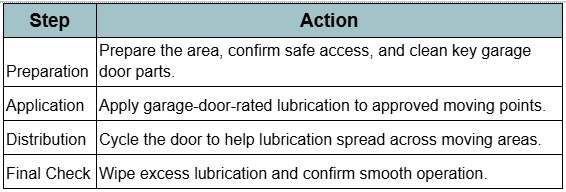
A technician follows a structured process, so lubrication supports smooth door travel without creating buildup. For safety, the technician starts with controlled preparation and completes inspection and checking before applying lubrication.
Step 1: Prepare the Area and Clean Components
Before any lubrication is applied, the technician cleans key garage door parts. Dust, old residue, and debris can mix with new lubrication and create buildup that increases friction. The technician wipes rollers, hinges, and spring surfaces and removes debris around the track area so the system can move smoothly.
This cleaning step also supports inspection and checking. Technicians can spot early concerns such as worn rollers, shifting brackets, or cable wear. Identifying these issues during a lubrication visit helps reduce the chance of larger repair needs later.
Step 2: Apply Lubricant to Key Parts
After cleaning, the technician applies a thin, controlled layer of garage-door-rated lubricant to approved areas. This is not a “spray everything” approach. Too much lubrication can drip, collect dust, and create a mess that works against smooth movement.
Technicians typically focus on:
- Hinge pivot points
- Roller bearings and stems (when appropriate for the roller type)
- Torsion spring surfaces
- Lock hardware (when present)
- Opener drive parts (chain or screw systems) based on manufacturer guidance
After application, the technician cycles the door to help distribute lubrication through moving areas, then wipes away excess lubrication and confirms the door travels smoothly and quietly.
How Often Should You Lubricate Your Garage Door
Knowing when to schedule lubrication is just as important as knowing what it supports. Lubrication frequency depends on door age, how often the system cycles, and local weather conditions. In most cases, lubrication should be part of a preventive garage door maintenance routine, completed before friction and noise begin to build.
For many homeowners, lubricating essential moving parts once or twice per year is a solid baseline. Doors with heavier daily use, older parts, or exposure to dust, humidity, or temperature swings may need lubrication more often. Staying consistent helps reduce friction, limit noise, support smoother door travel, and lower the chance of repair needs caused by dry, worn garage door parts.
As a general baseline, Forbes Home also recommends lubricating garage door rollers once or twice per year to help limit squeaks and support smoother movement.
To understand how lubrication fits into a full yearly service visit and the checkpoints technicians confirm, read What Do Technicians Check in Annual Door Inspections?
Recommended Lubrication Schedule for Homeowners
To keep a garage door operating smoothly and to support longer system life, lubrication should be part of a consistent garage door maintenance plan that provides peace of mind. Many homeowners pair lubrication with an annual garage door inspection so a technician can inspect key garage door parts, confirm door balance, and apply lubrication at the right points. Staying proactive helps reduce friction, supports quieter door travel, and lowers the chance of repair needs caused by dry, worn moving parts.
In most cases, lubrication is recommended at least once per year, though some systems benefit from more frequent service based on usage and local conditions. The right schedule helps reduce unnecessary strain on the opener and supports consistent performance across daily cycles.
A practical lubrication schedule includes:
- Once per year: Works for many homes with typical daily use and moderate conditions
- Twice per year: Helpful for high-cycle doors and environments with heat, humidity, or frequent dust
- Seasonal timing: Schedule lubrication before colder months if door movement becomes less smooth in cooler temperatures
- When symptoms appear: If you notice squeaking, grinding, or rough door travel, schedule inspection and lubrication sooner rather than waiting for the next annual visit
Factors That Affect Lubrication Frequency in San Antonio, TX
In San Antonio, local conditions can influence how often lubrication should be included in a garage door maintenance routine to prevent garage door repairs. Hot summers, humidity shifts, and periods of windblown dust can cause lubrication to break down faster than it would in milder, drier climates. When lubrication wears down, friction increases, and metal garage door parts may be more likely to develop corrosion over time.
Humidity is a key factor because it can accelerate rust on springs, hinges, and other metal parts if surfaces are not protected. Weather seals can also wear down faster, allowing more dust and moisture into the garage, which increases buildup around moving areas. Because of these conditions, some homeowners in San Antonio benefit from lubrication twice per year, especially when the door cycles frequently.
Dust and pollen can also cling to old lubrication and create a gritty residue that increases wear. Professional service helps because a technician can clean off buildup, inspect moving parts for early wear, and apply fresh garage-door-rated lubrication in controlled amounts. This approach supports smoother door travel and helps the system operate reliably through changing local conditions.
Garage door lubrication is an important part of garage door maintenance because it helps reduce friction, supports smoother door travel, and protects key moving parts from early wear. When lubrication is handled on a consistent schedule, homeowners can limit noise, improve daily performance, and reduce the chance of sudden issues that lead to repair needs.
If you hear unusual noises, notice jerky movement, or feel the door operating less smoothly, schedule inspection and lubrication before the problem grows. At Mojo Garage Door Service, our technicians provide targeted lubrication, detailed inspection, and perform any necessary repairs as part of our reliable repair support based on your door’s condition. Contact us or give us a call to schedule service and keep your garage door operating safely and smoothly.
Frequently Asked Questions
Can I lubricate my garage door myself, or should I call a professional?
Basic homeowner checking is fine, but lubrication is safest when handled by a technician—especially around springs and other high-tension parts. A professional can apply the right lubrication in the correct locations and also inspect for early wear that may need repair.
What safety precautions should I follow around garage door lubrication?
Start with safety-first checking. Keep your hands away from springs and cables, and avoid any spring tension adjustments. If you’re doing light cleaning, keep the door area clear, wear eye protection, and never work near moving parts while the door is operating. For lubrication service and all high-tension areas, schedule a technician.
Are there signs of wear I should check during garage door maintenance?
Yes. Watch for frayed cables, corrosion on springs or hardware, worn rollers, shifting brackets, damaged weather seals, and loose fasteners. Also listen for grinding, squeaking, scraping, or popping. If you notice these signs, schedule an inspection and repair before wear progresses.
What are the most important steps in a garage door maintenance routine?
A strong routine includes monthly visual checking, track-area cleaning, testing auto-reverse and photo-eye sensors, and scheduling an annual inspection and tune-up. Technicians also tighten hardware, check door balance, confirm spring tension, and apply lubrication at approved points.
How often should I lubricate my garage door to keep it working properly?
For many homes, lubrication once or twice per year is a solid baseline. Frequency may vary based on door age, daily cycles, dust exposure, and local weather. If noise or rough door travel appears, schedule inspection and lubrication sooner.
Which garage door parts require lubrication?
Technicians typically apply lubrication to hinge pivot points, roller bearing points (when appropriate for the roller type), bearings, torsion spring surfaces, and lock hardware when present. Opener drive parts (chain or screw) may also be lubricated based on manufacturer guidance. Tracks are usually cleaned and inspected rather than lubricated on the running path.
How do I know if my garage door needs a professional tune-up or repair?
Schedule professional service if the door becomes loud, moves unevenly, reverses unexpectedly, hesitates, or if a safety feature fails. Also, schedule an inspection if you notice cable wear, shifting tracks, or a door that feels heavier than normal. A technician can determine whether lubrication, adjustment, or repair is the right next step.
Why is garage door maintenance important for safety?
Maintenance helps confirm that safety sensors and auto-reverse response work correctly and that the door travels smoothly under controlled tension. Because the door is heavy and key parts operate under high tension, inspection and checking reduce the risk of unsafe operation and help protect the home.
What should I do before a garage door tune-up appointment?
Clear access to the door, opener, and safety sensors, and remove items from the immediate work area. Note any symptoms you’ve observed, noise, slow movement, uneven door travel, or sensor issues, so the technician can inspect efficiently. Also, ensure the technician can access the wall control and opener power source for testing.