A LiftMaster garage door opener can start acting unpredictably after a power flicker, a storm, a new remote, or a Wi-Fi change. You might press the remote and get nothing, see the opener light blink oddly, or watch the door start to close and then reverse with no clear reason.
A reset is often the quickest way to clear confused settings, restore normal response, and get your door moving smoothly again. The steps here keep it simple and safe, with clear next actions if the opener still hesitates, ignores controls, or behaves inconsistently.
Fast Reset Checklist Before You Start
Before you reset anything, it helps to confirm the opener is actually able to run and that the issue is not a physical door problem. A reset can clear settings, but it cannot correct a door that is binding, out of alignment, or too heavy to lift smoothly.
If your garage door opener is “not working” in a general way, this quick checklist helps you narrow down the problem fast.
For deeper troubleshooting when the opener will not run or seems dead, read Why Is a LiftMaster Garage Door Opener Not Working?.
Run these checks first:
- Power is on
- The opener light turns on
- The wall button responds
- Sensors show steady lights
- The door moves by hand
- Lock mode is off
If the wall button works but the remote does not, that usually points to a pairing or signal issue. In that case, a reset and reprogram step can help a lot. If nothing works at all, start with power and door movement checks in the next section.
What to Check Before Resetting
A reset works best when you do a few quick checks first. These take only a few minutes and can prevent you from resetting when the real issue is power, sensors, or a door that is struggling mechanically.
Start with power:
- Breaker not tripped
- The outlet has power
- Plug fully seated
- GFCI not tripped
If the opener has no lights at all, confirm the outlet is live by testing another device (like a lamp). If the outlet is dead, the opener will not respond, no matter how many times you reset.
Next, check the safety sensors (photo eyes) near the bottom of the tracks on both sides of the door. These sensors must “see” each other for the door to close normally. If they are misaligned or blocked, the door may reverse while closing or refuse to close completely.
Quick sensor checks:
- Both lenses clean
- No items blocking
- Lights not blinking
- Brackets not bent
- Wires not loose
In San Antonio, TX, dust and wind can coat sensor lenses faster than you expect, and bright afternoon sunlight can also interfere with the beam. If the sensor lights are flickering, try shading the sensor briefly or cleaning both lenses with a soft cloth.
Now test door movement by hand. With the door closed (best for safety), pull the emergency release handle to disconnect the door from the opener. Lift the door manually about halfway and let go carefully.
A healthy door should:
- Lift without strain
- Stay mid-position
- Roll smoothly on tracks
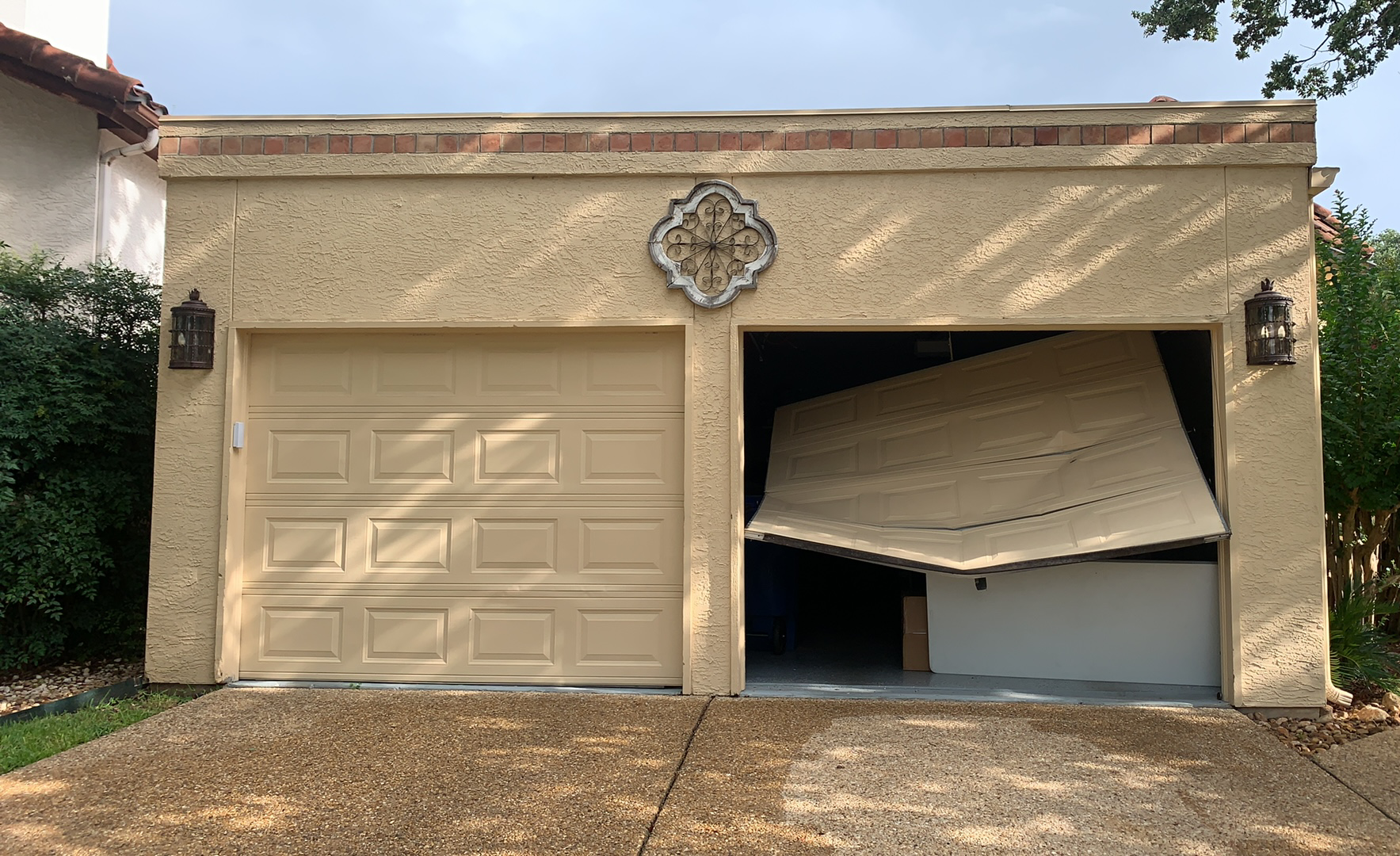
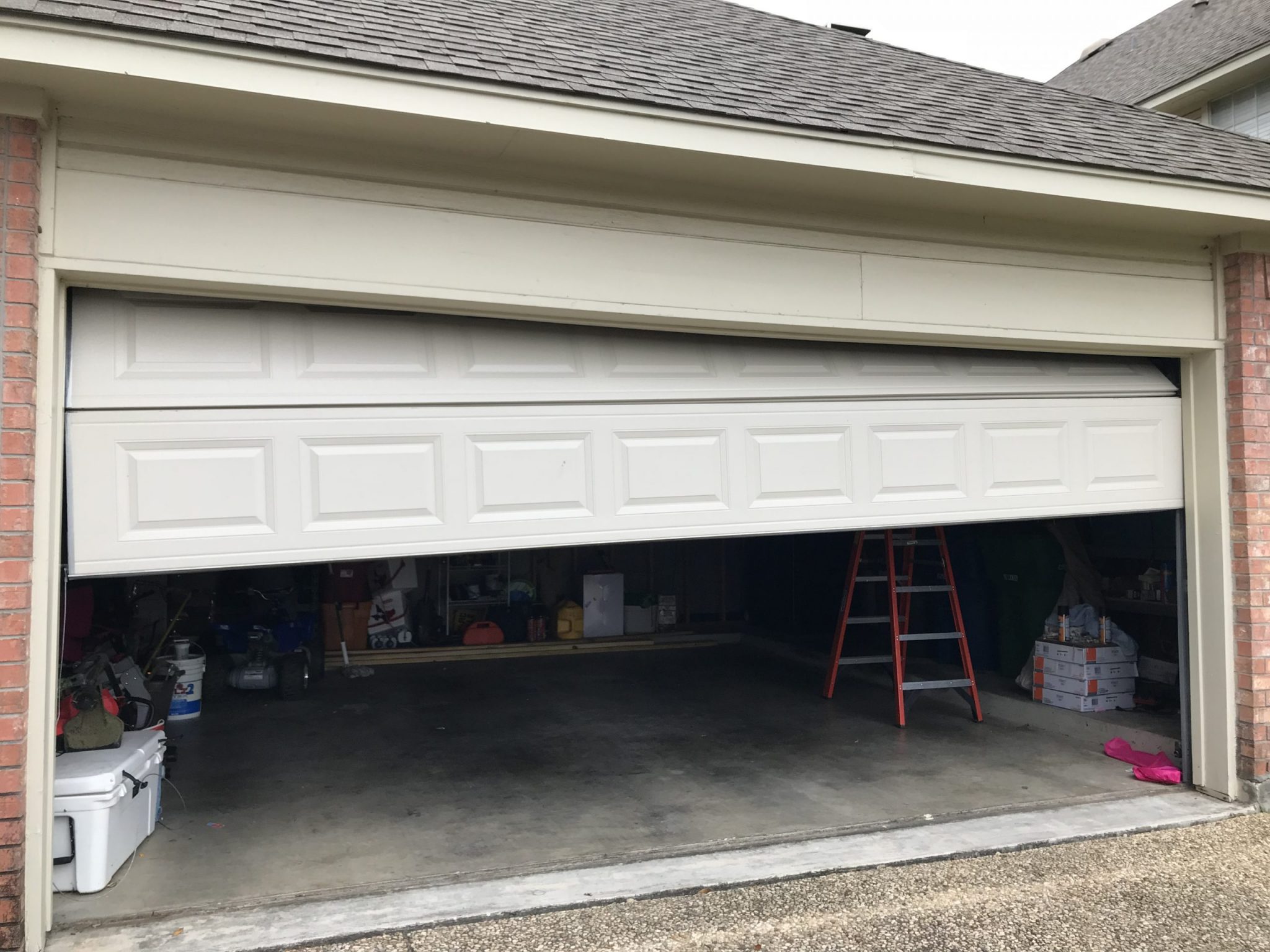
If the door is heavy, slams down, or sticks, the door system likely needs attention. In that situation, resetting the opener may not solve the real cause, because the opener is responding to extra resistance.
If power, sensors, and door movement check out, move on to the reset steps.
How to Reset a LiftMaster Garage Door Opener
“Reset” can mean different things depending on what you are trying to solve. Here are the two most common reset types:
- Soft reset: clears minor glitches (like a restart)
- Learn-button reset: clears paired remotes and keypads (like a clean start)
Start with the soft reset first. If the problem continues, move to the learn-button reset.
Soft Reset (Power Cycle)
A soft reset is the safest, fastest first step. It can clear temporary logic issues that happen after power flickers or electrical noise.
Steps:
- Unplug the opener
- Wait 60 seconds
- Plug it back in
- Watch the lights
After power returns, test the wall button first. If the wall button runs the door but the remote does not, the opener is likely fine, and you may only need to reprogram the remote or replace its battery.
If the opener still does not respond correctly, move to the learn-button reset.
Learn-Button Reset (Clears Memory)
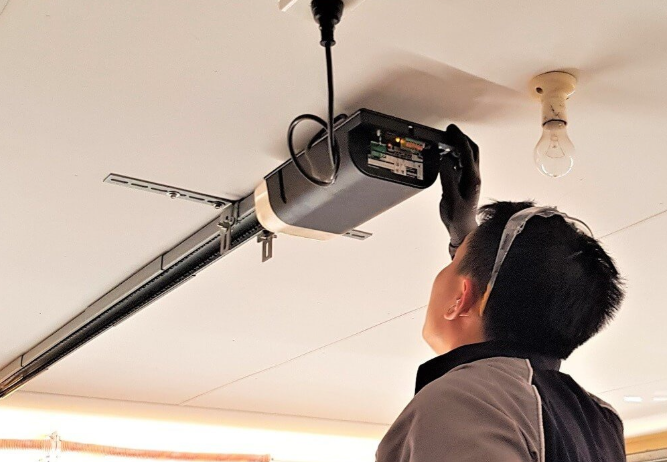
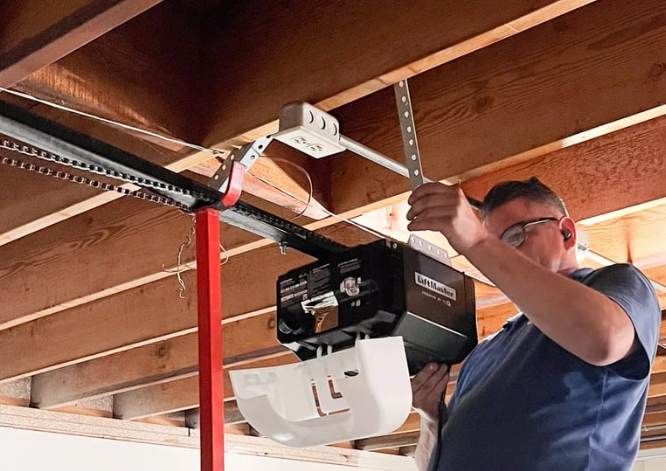
Most LiftMaster units have a LEARN button on the motor unit. You’ll usually find it under the light cover or near the antenna wire. The button color varies by model (common colors include yellow, purple, red, orange, or green), but the process is similar.
This reset is useful when:
- Remotes stopped working
- The keypad stopped working
- You moved into a home
- You lost a remote
- You changed the control devices
Steps to clear memory:
- Locate the LEARN button
- Press and hold it
- Hold until the light changes
- Release the button
- Confirm pairing cleared
For the exact memory-erase timing, use Chamberlain Group’s step list for clearing opener memory.
What you should see: The learn indicator light goes out or changes behavior after holding the button. That usually means the opener’s memory was cleared.
Important note: After this reset, your remotes and keypad will not work until you reprogram them. That is expected.
Wall Control Reset (When Supported)
Some LiftMaster wall controls support additional reset behavior or modes, depending on the model. This is not universal, so do not worry if your wall control does not match these steps.
If your wall control has a Lock button, you can also confirm the opener is not in lock mode. Lock mode disables remotes, which can feel like a failure even when the opener is fine.
Try this:
- Hold the Lock button
- Wait for the indicator
- Release and test
If the remote suddenly works again after turning off lock mode, you may not need a learn-button reset at all.
What the Lights and Sounds Can Tell You
LiftMaster openers often communicate through light patterns, clicking, or beeps. A reset can clear some errors, but not problems caused by sensors, door resistance, or travel settings.
Common clues:
- Rapid flashing lights
- The door reverses closing
- Clicking with no move
- Beeps after outage
- Light blinks repeatedly
If the door starts down and reverses, sensors are still the first thing to re-check. If the opener hums but does not lift, that can signal a jammed door, a seized part, or a disconnected door system.
What to Do After Reset so It Works Again
After a learn-button reset, your opener may run with the wall button but ignore remotes and the keypad. That’s because the opener “forgot” them. The next step is to reprogram your controls, then confirm safe operation.
Here’s the best order:
- Reprogram remotes
- Reprogram keypad
- Test wall control
- Test door travel
- Test auto reverse
- Confirm sensor beam
Reprogram a LiftMaster Remote
Most LiftMaster remotes can be reprogrammed in under a few minutes.
Steps:
- Press LEARN once
- Light turns on
- Press the remote button
- Wait for the click
- Test from the driveway
If you have multiple remotes, reprogram them one at a time. If you have a universal remote, it may require a different sequence based on brand and model.
If you want the full step flow for remote styles and common pairing issues, read How to Reprogram a LiftMaster Remote After a Reset?
Reprogram a Keypad (If You Have One)
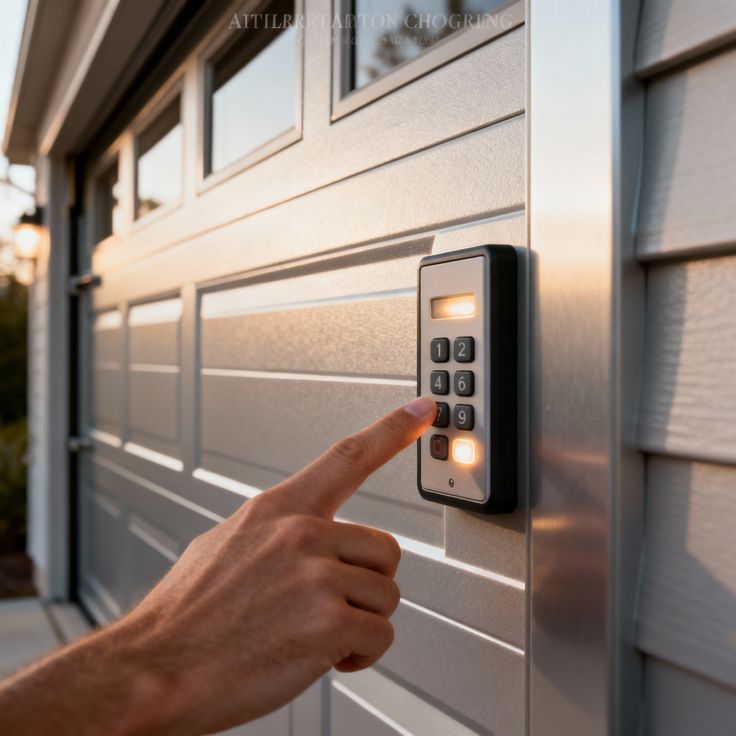
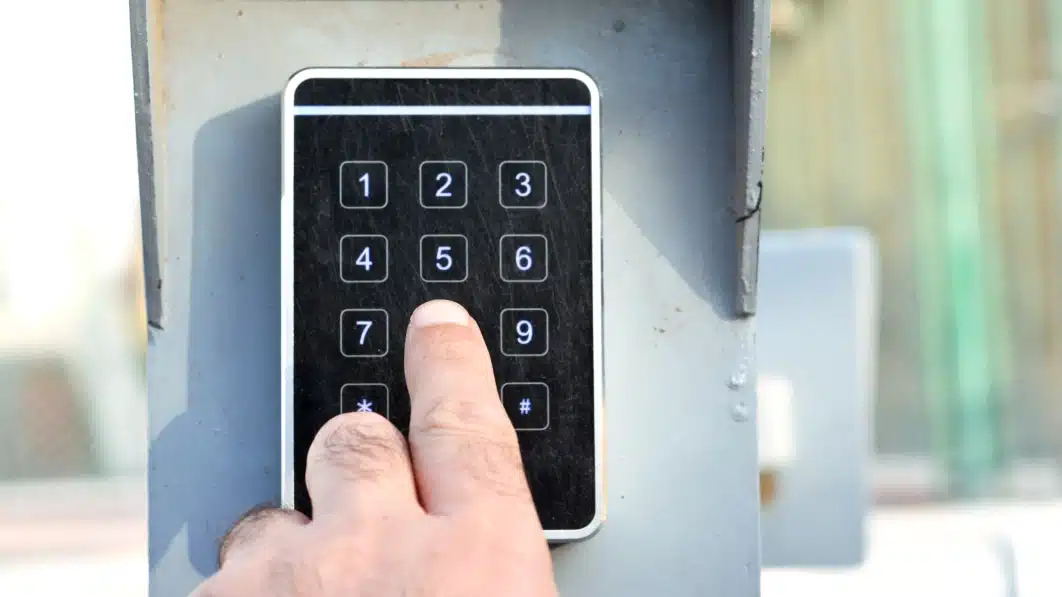
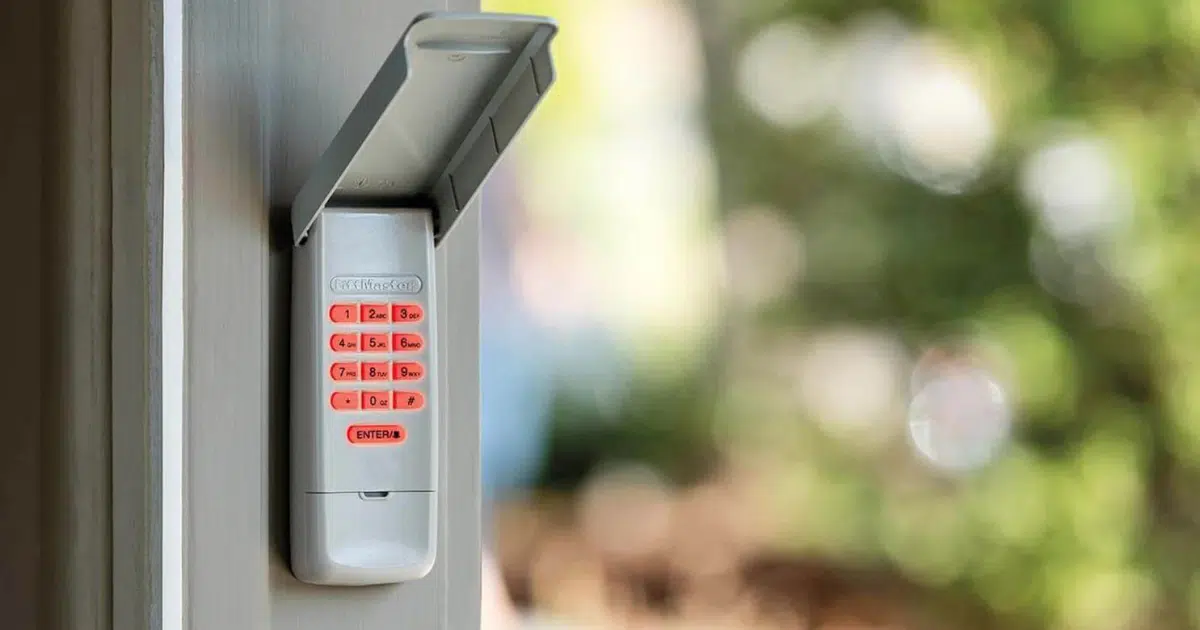
Keypads vary, but the general idea is the same: you place the opener into learn mode, then enter a PIN and confirm.
Helpful checks before you start:
- Replace keypad battery
- Verify keypad lights
- Use a simple PIN
If the keypad lights are dim or inconsistent, a fresh battery can save a lot of frustration.
Test Travel and Safety Settings
After any reset or reprogram step, always run a quick safety test. You are confirming the door closes fully, opens fully, and reverses when it should.
Run these checks:
- Fully closes smoothly
- Fully opens smoothly
- Reverses on the object
- Sensors stop closing
If the door stops short, slams shut, or pushes hard against the floor, the travel limits or force settings may need adjustment. Those settings exist to keep the system safe. If the door behavior looks unsafe, stop testing and avoid repeated cycles.
How to Reconnect LiftMaster myQ After a Reset
If your myQ app stopped controlling the door after a reset, the opener may have lost its Wi-Fi connection, or the app pairing needs to be refreshed.
Start with the basics that solve many reconnect problems:
- Confirm Wi-Fi network
- Confirm password correct
- Restart router
- Restart phone Wi-Fi
- Power cycle opener
Now open the myQ app and follow its reconnect steps. Some setups require the opener to go into Wi-Fi setup mode again, especially after a learn-button reset or after changing your router name or password. If smart-home links suddenly stop working, recent myQ platform changes can also be a factor.
After reconnecting, test:
- App opens the door
- App closes the door
- Status updates live
If commands work but the status is delayed, you may have a weak Wi-Fi signal in the garage. In many San Antonio homes, garages sit on the edge of router range, especially with thick walls or older construction.
If you want the exact reconnect flow plus common pairing hang-ups, read How to Reconnect LiftMaster myQ After a Reset?
When a Reset Is Not Enough
A reset helps with setting confusion. It does not correct worn hardware, a heavy door, or a failing opener motor. If the opener strains, stops, or makes harsh noises, you may need LiftMaster garage door opener repair instead of more resets.
Signs the issue is bigger than settings:
- Motor hums only
- Door reverses often
- Chain jerks loudly
- Remote work randomly
- The door feels too heavy
- Grinding or squealing
If the door is heavy by hand, the problem may be door balance (springs) or track friction. In that case, the opener is reacting to resistance, and resetting it won’t remove the resistance.
Also, consider the age and features of the unit. If your opener is older, very loud, missing modern safety features, or constantly loses settings after storms, LiftMaster garage door opener installation may make more sense than repeated troubleshooting.
Situations where installation is often the better move:
- The opener is very old
- No myQ capability
- No battery backup
- Frequent logic issues
- Parts are hard to source
We can help you decide based on what the opener is doing right now and whether the door system is in good condition.
Ready to Get Your Door Moving Again
If your LiftMaster garage door opener is acting up, a clean reset and proper reprogramming can bring it back fast, especially after power flickers, remote changes, or Wi-Fi updates. If the opener still struggles after a reset, that’s often a sign of sensor trouble, travel setting issues, or worn hardware that needs a more direct solution.
Mojo Garage Door Service is here to help San Antonio homeowners restore smooth operation with clear options, whether that means resetting and syncing controls, handling LiftMaster garage door opener repair, or completing a LiftMaster garage door opener installation when that is the smarter long-term move for your home. Contact us or give us a call.
Frequently Asked Questions
Why does myQ say offline, but the remote still works?
That usually means the opener is fine and the issue is Wi-Fi signal, router settings, or app pairing.
Does myQ work on 5 GHz Wi-Fi?
Many openers connect best on 2.4 GHz. If your router combines both bands under one name, we may need to connect through 2.4 GHz during setup.
What if myQ connects but keeps dropping offline?
That often points to a weak Wi-Fi signal in the garage. Strengthening coverage near the opener typically improves reliability.
Can we reconnect myQ without deleting the device?
Sometimes yes, but if the app keeps holding the old setup profile, deleting and adding again can be faster.
Should we restart the router before reconnecting?
Yes. Restarting the router can clear glitches and make reconnecting smoother.
What if the app will not find the opener?
We check setup mode timing, app permissions, Wi-Fi band, and signal strength. Any one of these can block discovery.
Does a power outage cause myQ to disconnect?
It can. Power flickers can reboot the router or opener in an unstable way, which can require a reconnect.
Will remote programming affect myQ?
Not directly. Remote pairing and myQ pairing are separate, but after a full reset, you may need to do both.
When should we reach out for help?
If reconnect steps fail repeatedly, or the opener itself is inconsistent, we can troubleshoot on-site and restore reliable operation.